
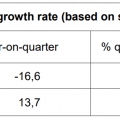
If you work with gross domestic product (GDP) data or have an interest in economic statistics, the following note might be important to you. Stats SA announced in its most recent GDP statistical release1 that it will no longer use the annualised rate as the headline rate of change. There are several measures of economic read more »
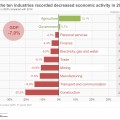
Stats SA’s Gross domestic product (GDP) release for the fourth quarter of 2020 (October–December) concludes the series for the year, providing a sobering overview of 2020. Manufacturing and trade help lift growth in the fourth quarter The economy grew by 1,5% in the fourth quarter, giving an annualised1 growth rate of 6,3%. This follows read more »
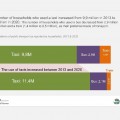
The National Household Travel Survey (NHTS), 2020 results shows that ‘walking all the way’ remained the mode of travel that was most used by learners to reach their educational institution in all nine provinces. The survey, released by Statistics South Africa in collaboration with the Department of Transport, reports that about 10,1 million learners walked read more »
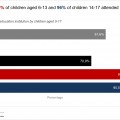
The old African proverb, “It takes a village to raise a child”, has often been quoted to emphasise what it takes to raise a successful and well-rounded child into adulthood. Raising a child requires attention to their inner and outer growth at every phase of their lives. However, when measuring the overall wellbeing of children, read more »
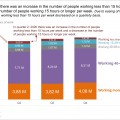
According to the Quarterly Labour Force Survey (QLFS), there was an increase of 333 000 in the number of employed persons, an increase of 701 000 in the number of unemployed persons and a decrease of 890 000 in the number of people who are out of the labour force, in the 4th quarter of 2020 compared to read more »
19 February 2021 The producer price indices (PPIs) for January 2021 will reflect updates to the basket and weights, and will be rebased to December 2020 = 100. Tracking price changes of locally produced goods, the PPIs cover the following industries: manufacturing; water and electricity; mining and quarrying; and agriculture, forestry and fishing. Industry-level weights read more »
The annual rate of consumer inflation was 3,2% in January, slightly up from December’s reading of 3,1%. The monthly increase in the consumer price index was 0,3%, following 0,2% between November and December. The monthly changes in the CPI have remained within a range of 0% to 0,3% since August 2020. Food and non-alcoholic beverages, read more »
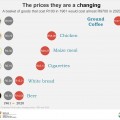
While many couples will be celebrating Valentine’s Day this Sunday, 14 February, historians may have a different take on the day. 14 February 2021 is the 60th anniversary of the introduction of the rand as South Africa’s currency. Following the adoption of recommendations of the Decimal Coinage Commission in 1958, the British-styled pounds, shillings and read more »
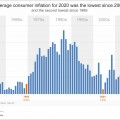
The December 2020 Consumer Price Index (CPI) release concludes the data points for the entire calendar year. The average annual inflation rate for 2020 was 3,3%. This is the lowest annual average rate since 2004 (1,4%) and the second lowest since 1969 (3,0%). One of the reasons for low inflation in 2004, according to the read more »
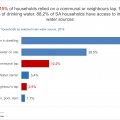
The General Household Survey, 2019, which tracks the progress of development and identifies persistent service delivery gaps in South Africa, was recently released by Statistics South Africa. Now in its eighteenth year, the survey has yielded a rich set of information across a wide variety of fields such as education, health, disability, social security, housing, read more »