
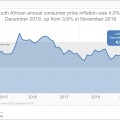
Annual consumer inflation edged up to 4,0% in December from November’s 3,6%. The main contributors to the 4,0% rate were food and non-alcoholic beverages; housing and utilities; transport; and miscellaneous goods and services. The food and non-alcoholic beverages category recorded an annual rate of 3,9%, slightly higher than the 3,5% recorded in November. Bread and read more »
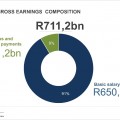
Formal sector employment decreased by 28 000 in September 2019, with 11 000 full-time and 17 000 part-time jobs shed during the quarter. The September 2019 Quarterly Employment Statistics (QES) survey showed that an estimated 10 142 000 people were employed in the formal non-agricultural sector of the South African economy, which is down by 28 000 from 10 170 000 in the read more »
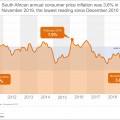
Annual inflation eased further in November, falling to 3,6% from October’s 3,7%. This is the third successive month of disinflation, which means that the pace of price increases is slowing down. November’s reading is the lowest since December 2010 when the rate was 3,5%. The highest rate recorded since December 2010 was 7,0% in February read more »

After rebounding by a revised 3,2%1 in the second quarter of 2019, activity in the South African economy slipped slightly in the third quarter. Mining, manufacturing and transport were the biggest drags on growth in gross domestic product (GDP). Mining was down by 6,1%, driven largely by a fall in the production of platinum group read more »
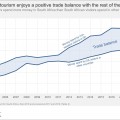
South Africa enjoys a positive tourism trade balance with the rest of the world. What this means is that non-resident visitors spend more money in our country than South African travellers spend abroad. However, the trade balance surplus has narrowed since 2016. In 2018, non-resident visitors1 (which includes both tourists and same-day visitors) spent a read more »
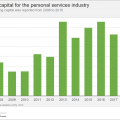
Stats SA provides a snapshot of working capital across the formal business sector in the latest release of the Annual Financial Statistics (AFS) report. Working capital is a measure of a company’s liquidity and is one of a number of measures that provide insight into a company’s ability to pay off debt. To calculate working read more »
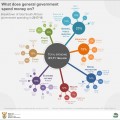
The South African government spent 7,3% more in 2017/18 than it did in 2016/17. The rise was largely driven by general public services, education and health. This pushed total government spending up to R1,71 trillion1 in 2017/18, R116 billion more than the R1,59 trillion spent in 2016/17. This is according to the latest Financial statistics of consolidated general read more »
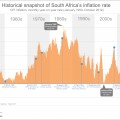
Annual consumer inflation continued its downward streak, dropping to 3,7% in October from 4,1% in September. October’s reading is the lowest since February 2011 when the annual rate was also 3,7%. Consumers can breathe a sigh of relief at this news, as the prices of many goods and services are increasing at a much slower read more »
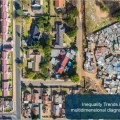
Like many countries around the world, South Africa has faced many socio-economic challenges over the years. Emphasis has been placed on improving the lives of citizens by targeting poverty, inequality and unemployment. A recently released report by Statistics South Africa, in partnership with Agence Francaise de Développement (AFD), Southern Africa Labour and Development Research Unit read more »
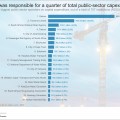
Public-sector investment in the nation’s infrastructure slowed for a second consecutive year, falling by 8,2% in 2018. This followed a 4,0% decline in 2017. These decreases have seen public-sector capital expenditure slip to a level last seen in 2014. Capital expenditure is money that institutions spend to buy, maintain or upgrade fixed assets such as read more »