
South Africa’s annual inflation rate nudged up to 4,6% in February from January’s 4,5%, inching past the 4,5% midpoint of the South African Reserve Bank’s monetary policy target range. The last time the inflation rate was above the midpoint was in November 2018 when the rate was 5,2%. The monthly shift in consumer prices – read more »
During the 7-year period before the South Africa Demographic Health Survey (SADHS) 2016, the pregnancy related mortality ratio was 536 pregnancy-related deaths per 100 000 live births. For every 1 000 live births, about five women died during pregnancy or within 2 months after childbirth (SADHS, 2016). While South Africa has made significant progress with regard to read more »
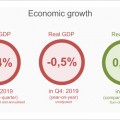
The South African economy contracted by 1,4% in the fourth quarter of 2019, following a contraction of 0,8% (revised) in the third quarter.1 Transport and trade were the main drags on overall activity, according to the latest gross domestic product (GDP) figures. Seven of the ten industries contracted in the fourth quarter. Finance, mining and read more »
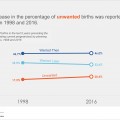
For most women, the news that they are expecting a baby is a happy event filled with excitement in anticipation of the arrival of their bundle of joy. However, not all births are “wanted”. A recent report by Statistics South Africa entitled Unwanted Fertility in South Africa reveals that about 20% of all births in read more »
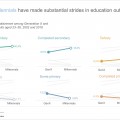
It is often said that each generation should be better off than their parents. In South Africa, generational changes have largely been impacted by important political changes that affected the choices available to Generation X’ers and Millennials in terms of their educational and labour market participations. According to a recent report, Education and Labour Market read more »
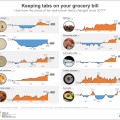
How much do South Africans pay for groceries? Stats SA has released a list with prices of 191 popular retail items with data going back to 2017. The list holds some surprises. Pulled from that list, each item in the graphic below has its own unique story. The national average price of a loaf of read more »
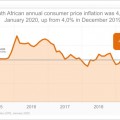
South Africa’s annual inflation rate was 4,5% in January, higher than that recorded in December (4,0%) and November (3,6%). This places inflation right on the 4,5% midpoint of the South African Reserve Bank’s monetary policy target range. The main contributors to the 4,5% rate were food and non-alcoholic beverages; housing and utilities; transport; and miscellaneous read more »
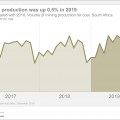
Exactly a week after delegates closed the 26th Investing in African Mining Indaba, Stats SA released data on the performance of the mining industry in 2019. The level of production was 1,3% lower in 2019 than 2018, which in turn was 2,1% lower than 2017. Despite a positive showing from both copper and manganese, a read more »
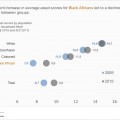
South Africa is known as one of the most unequal countries in the world, reporting a per-capita expenditure Gini coefficient of 0,67 in 2006, dropping to 0,65 in 2015. This is according to the Inequality Trends in South Africa report released by Stats SA. According to the Palma ratio, the top 10% of the population read more »
Travel is a necessity South Africans travel from their homes to places of work, education, healthcare, for business, for leisure and social activities daily. Travel is a necessity. The increase in urbanisation and population numbers changes the demand for urban infrastructure and transport services. But, how can we know and understand transport needs and behaviour read more »