
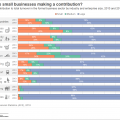
As government introduces new legislation to further support small, medium and micro-sized enterprises (SMMEs), recently released data from the 2019 Annual Financial Statistics (AFS) survey shows the growing role that small businesses play in the formal business sector. The National Small Enterprise Amendment Bill 2020, gazetted recently, outlines the establishment of an ombud service that read more »
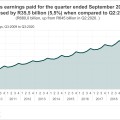
According to the Quarterly employment statistics (QES) survey released by Statistics South Africa (Stats SA), jobs in the formal non-agricultural sector increased by 75 000 in the third quarter of 2020. This brings the total number of persons employed in the formal non-agricultural sector in South Africa to approximately 9,6 million. According to the report, formal read more »
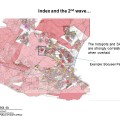
With South Africa officially facing its second wave of COVID-19 infections, Statistics South Africa (Stats SA) has released an innovative online mapping tool that shows which communities may be more adversely affected by COVID-19 outbreaks. The South African Covid-19 Vulnerability Index (VIndex) was developed as a way of using the smallest area population data available read more »
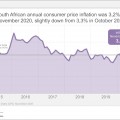
Annual consumer inflation retreated slightly in November, to 3,2% from 3,3% in October. There was no monthly change in the index. Food and non-alcoholic beverage prices continued to climb, recording an aggregate annual increase of 5,8%, up from 5,4% in October. Food inflation contributed 1,0 percentage point to November’s headline rate of 3,2%. There were read more »
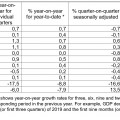
South Africa’s economy rebounded in the third quarter of 2020 (July–September), coinciding with the easing of COVID-19 lockdown restrictions. All industries recorded an increase in economic activity compared with the second quarter, with manufacturing, trade and mining leading the charge. Businesses were supported by an increase in both exports and household spending. Gross domestic product read more »
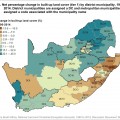
The land under our feet is, in several senses, living. Alive in terms of the organisms that support healthy soils to cultivate crops. Active in terms of abiotic (non-living) and biotic (living) factors that interact with each other to create distinct ecological systems. Malleable in terms of the changes that humans bring about. Digital snapshots read more »
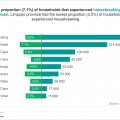
Housebreaking or burglary has consistently been the most common crime experienced by households in South Africa. The number of households that experienced this crime in the five years preceding the survey has increased from 2,1 million in 2015/16 to 2,3 million in 2019/20. This is according to the Governance, Public Safety, and Justice Survey (GPSJS) read more »
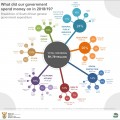
A recent release from Stats SA provides a breakdown of financial data from all 708 institutions in government. This article provides an overview of what government spent money on in 2018/19, with focus on the public service wage bill. South African general government spent R1,79 trillion in 2018/19, according to the latest Financial statistics of consolidated read more »
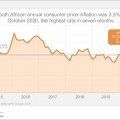
Annual consumer inflation hit a seven-month high in October, driven largely by rising prices for food and non-alcoholic beverages. Headline inflation was 3,3%, the biggest annual rise since March when the rate was 4,1%. The monthly increase in October was 0,3%, edging up from 0,2% recorded in both September and August. Food and drink inflation read more »
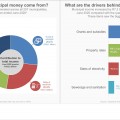
Even though South Africa’s 257 municipalities increased their spending in the quarter ended June 2020, the rise was slower than increases recorded in previous quarters. Spending increases by 4,6% Local government spent R105,9 billion in the quarter ended June 2020, up by R4,6 billion (or 4,6%) compared with the quarter ended June 2019, according to the latest read more »