
South Africa is home to more than 3 million immigrants, accounting for 5,1% of the country’s population, according to the latest Migration Statistics Report based on the 2022/23 Income and Expenditure Survey.
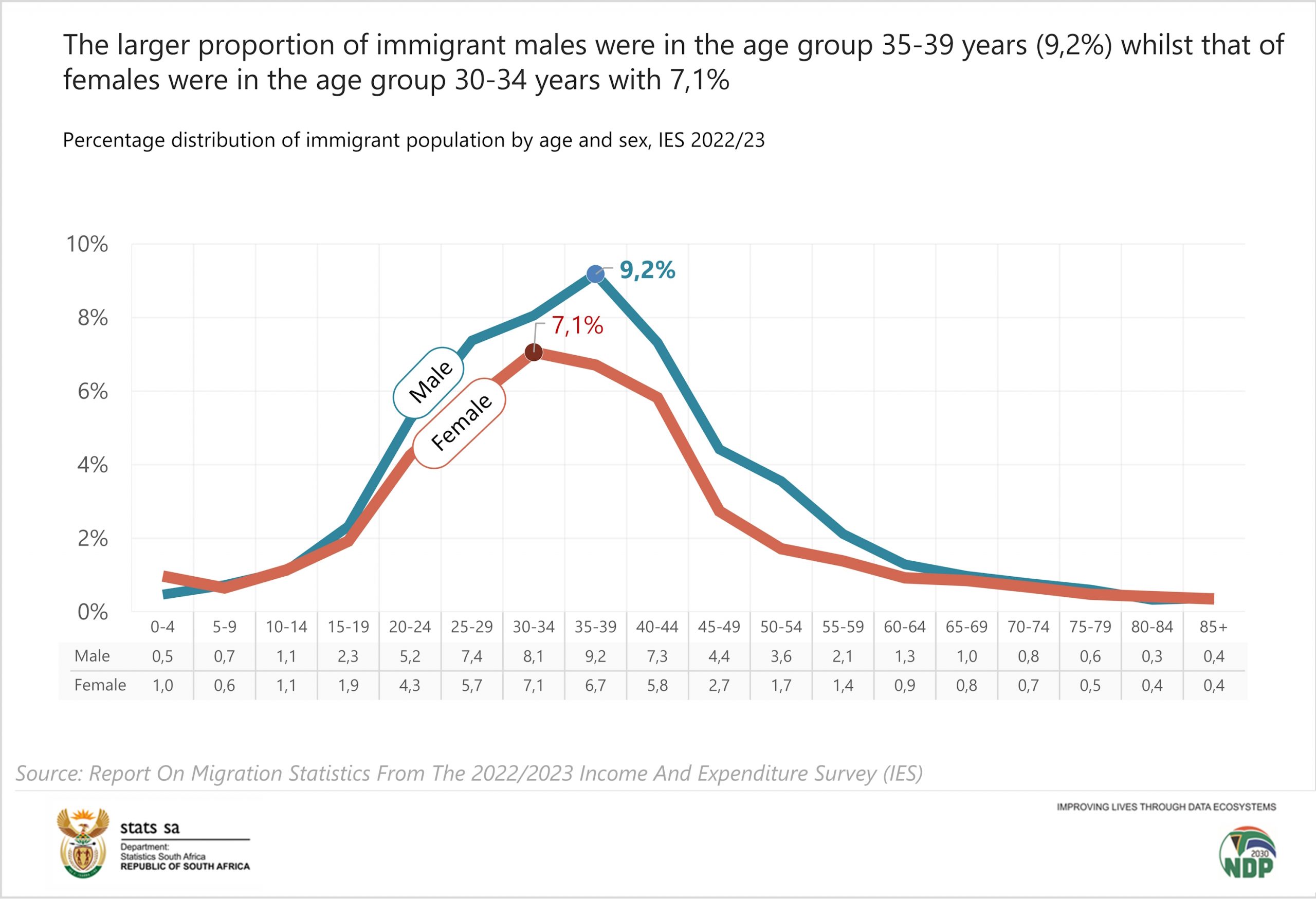
Most of these immigrants—63,6%—hail from countries within the Southern African Development Community (SADC). The data also reveals a distinct demographic trend: most immigrants are men (56%), and the largest age group falls between 35 and 39 years old.
The report, compiled by Statistics South Africa, goes beyond headline numbers to unpack the socio-demographic patterns of migration. It examines both international and internal migration, offering a granular view of how people move across the country. Key indicators are broken down by province, as well as by metropolitan and non-metropolitan municipalities, providing insights into where migrants settle and how these movements shape local economies and communities.
Internal Migrants Earn and Spend More Than Other Groups
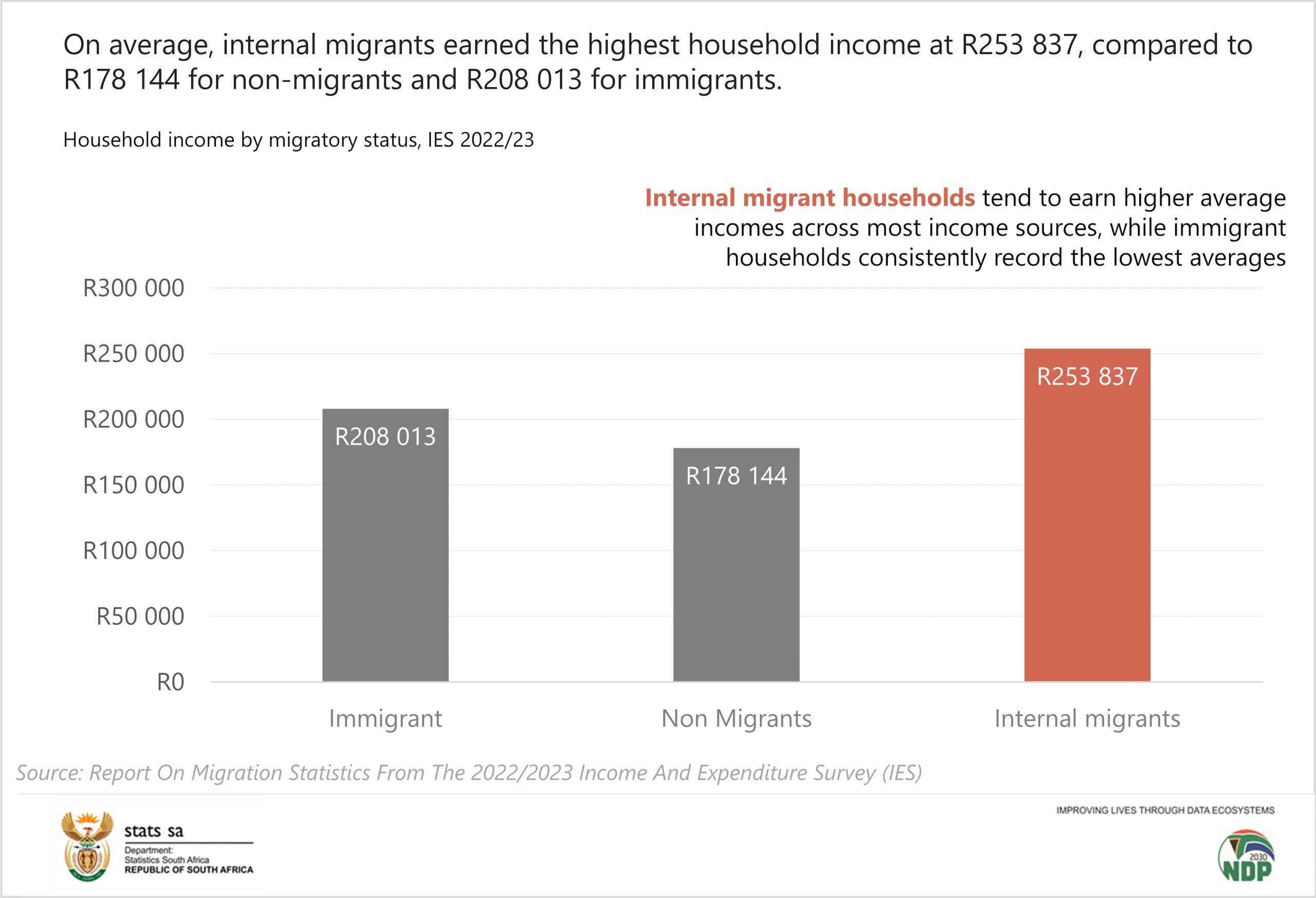
According to the data, internal migrant (movement within the country) households recorded the highest average income at R253 837, alongside average expenditure of R158 409—well above levels for non-migrant and immigrant-headed households. Across all groups, income from work was the main source of earnings, while housing, water, electricity, gas, and other fuels dominated spending. Internal migrants spent an average of R49 415 on this category, compared to R44 611 for non-migrants and R37 981 for immigrants.
Education Gaps Highlight Early Childhood Concerns
Aligned with Sustainable Development Goal (SDG) 4, which promotes inclusive and equitable education, the report flags early childhood development as a challenge. Among South African-born children, 18,4% attended crèches or educare centres, slightly higher than 16,6% among immigrant children. More concerning is that 23,4% of immigrants aged 5–18 years reported never attending an educational institution, compared to just 5,3% of South African-born children.
Health and Well-being: Public Clinics Dominate
Health indicators show that most people aged 15 and older rated their health positively. Among immigrants, 55,9% described their health as “good”, compared to 50,5% of South African-born individuals. When seeking care, public clinics were the first choice for both groups—77,7% of immigrants and 69,3% of locals—underscoring reliance on public health services. Public hospitals followed at 9,6% for immigrants.
Despite challenges, immigrants expressed optimism about their well-being. About 31,7% said they feel happier than a decade ago, compared to 25% of RSA-born population.
Work Drives Internal Migration
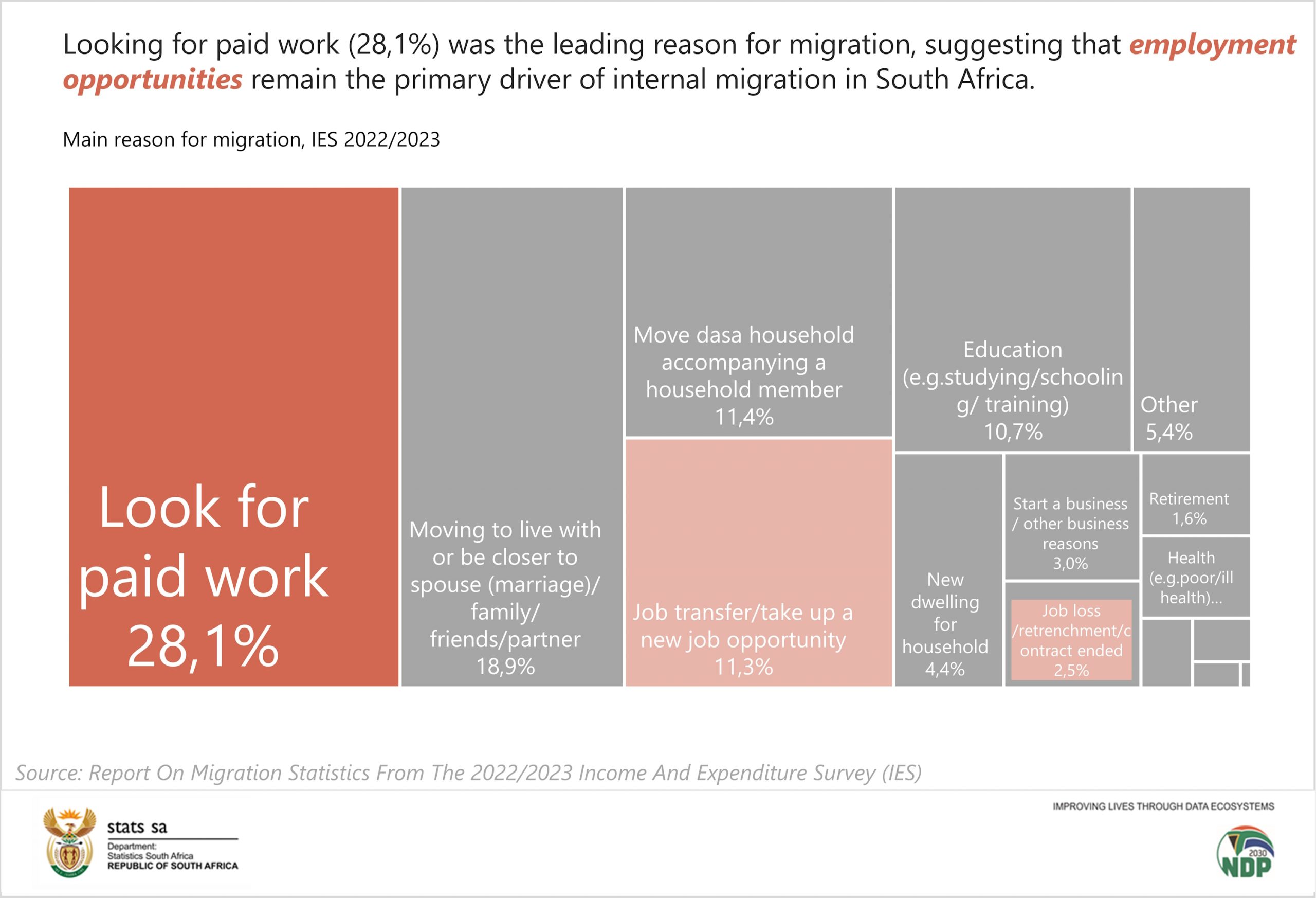
Employment remains the biggest driver of internal migration, with 28,1% moving in search of paid work. The report estimates 9,1 million lifetime migrants have crossed provincial boundaries, with Gauteng attracting the lion’s share—4 553 644 people—followed by the Western Cape with 1 526 581. Between November 2017 and November 2022, at least 1,53 million period migrants relocated. The most common migration streams were Limpopo to Gauteng (13,4%) and KwaZulu-Natal to Gauteng (7,2%).
The Report on Migration Statistics from the 2022/2023 Income and Expenditure survey (IES) offers a detailed analysis of how migration shapes the socio-economic well-being of individuals and households in South Africa. It explores the ripple effects on income, education, employment, and consumption patterns, providing insights that help explain broader trends in South Africa’s economy and society. For a deeper understanding of these dynamics, the full report offers comprehensive data and analysis that extend far beyond the highlights shared in this article.
For more information, download the full report on our website here.