
In the 3rd quarter of 2020 there were significant movements in the South African labour market. According to the Quarterly Labour Force Survey (QLFS), a large number of persons moved from the “other not economically active” category to “employed” and “unemployed” status between quarter two and quarter three of 2020. The movement was proportionately more read more »
The economic downturn and reduced levels of government infrastructure investment have taken a heavy economic toll on capital spending by the public sector. Public-sector spending on infrastructure (referred to as capital expenditure) decreased for a third consecutive year, falling from R250 billion in 2018 to R231 billion in 2019 according to Stats SA’s latest Capital expenditure by read more »
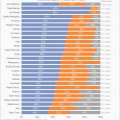
It has been five years since the #FeesMustFall campaign. Stats SA takes a look at where higher education institutions get their money from, and how these revenue streams have shifted since 2015. The #FeesMustFall campaign began in October 2015 when thousands of students took to campuses across the country to protest rising tuition fees. The read more »
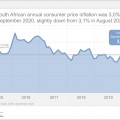
South Africa’s annual inflation rate was 3,0% in September, lower than the rates recorded in July (3,2%) and August (3,1%). The change in the consumer price index between August 2020 and September 2020 was 0,2%, identical to the reading in the previous month. The alcoholic beverages and tobacco division was the main reason for the read more »
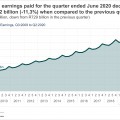
According to the Quarterly employment statistics (QES) survey released by Statistics South Africa (Stats SA), the formal non-agricultural sector shed 648 000 jobs in the second quarter of 2020. This brings the total number of persons employed in the formal non-agricultural sector in South Africa to 9,5 million. According to the report, formal sector jobs decreased read more »
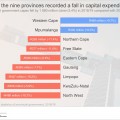
In June 2020, government announced the roll-out of an extensive infrastructure investment drive that would cover 55 projects across six sectors. The programme is an attempt to kick-start an economy battered by COVID-19, as well as to address a history of chronic infrastructure underspending.1 The concern over declining infrastructure investment is further confirmed by Stats read more »
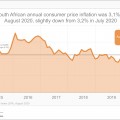
Annual CPI inflation pulled back slightly in August, easing to 3,1% from 3,2% in July. The monthly increase in prices was 0,2%. This is slightly lower than the average monthly change of 0,3% over the past year and lower than the 3-month average of 0,4%. Transport was the most significant contributor to the 0,2% monthly read more »
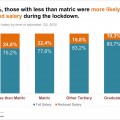
The South African economy shed 2,2 million jobs in the second quarter of 2020, according to the latest Quarterly Labour Force Survey Quarter 2: 2020 results, released by Statistics South Africa on 29 September 2020. The results indicate that the number of employed persons decreased by 2,2 million to 14,1 million in the 2nd quarter read more »
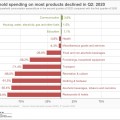
The punch in the gut was severe. Perhaps the second quarter of 2020 will become known as the pandemic quarter. South Africa’s economy suffered a significant contraction during April, May and June, when the country operated under widespread lockdown restrictions in response to COVID-19. Gross domestic product (GDP) fell by just over 16% between the read more »
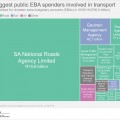
The South African National Roads Agency Limited (SANRAL) and the Gautrain Management Agency were two of five transport institutions that cut spending in 2018/19. Total expenditure by extra-budgetary accounts and funds (EBAs) involved in transport fell by 3,5%, from R32,0 billion in 2017/18 to R30,9 billion in 2018/19.1 This is according to the latest Financial statistics of read more »