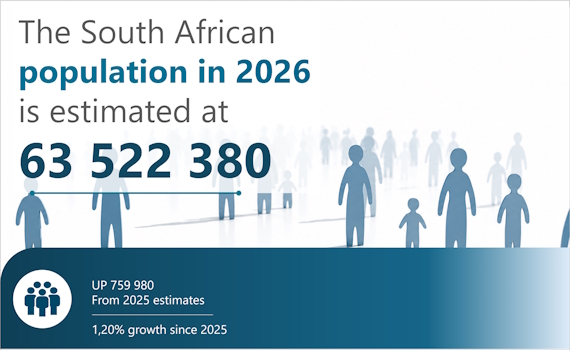
South Africa’s population has grown significantly over the past two decades, reflecting the combined impact of births, deaths and migration. The latest Mid-Year Population Estimates (MYPE) 2026 show that the country’s population increased from 42,9 million in 2002 to 63,5 million in 2026, an average annual growth rate of 1,3%. Over the same period, the world’s population grew from 6,3 billion to 8,3 billion.
Although slightly more boys than girls are born in South Africa, women outnumber men in the overall population. Approximately 51% of South Africa’s population in 2026, or 32,3 million people, are female.
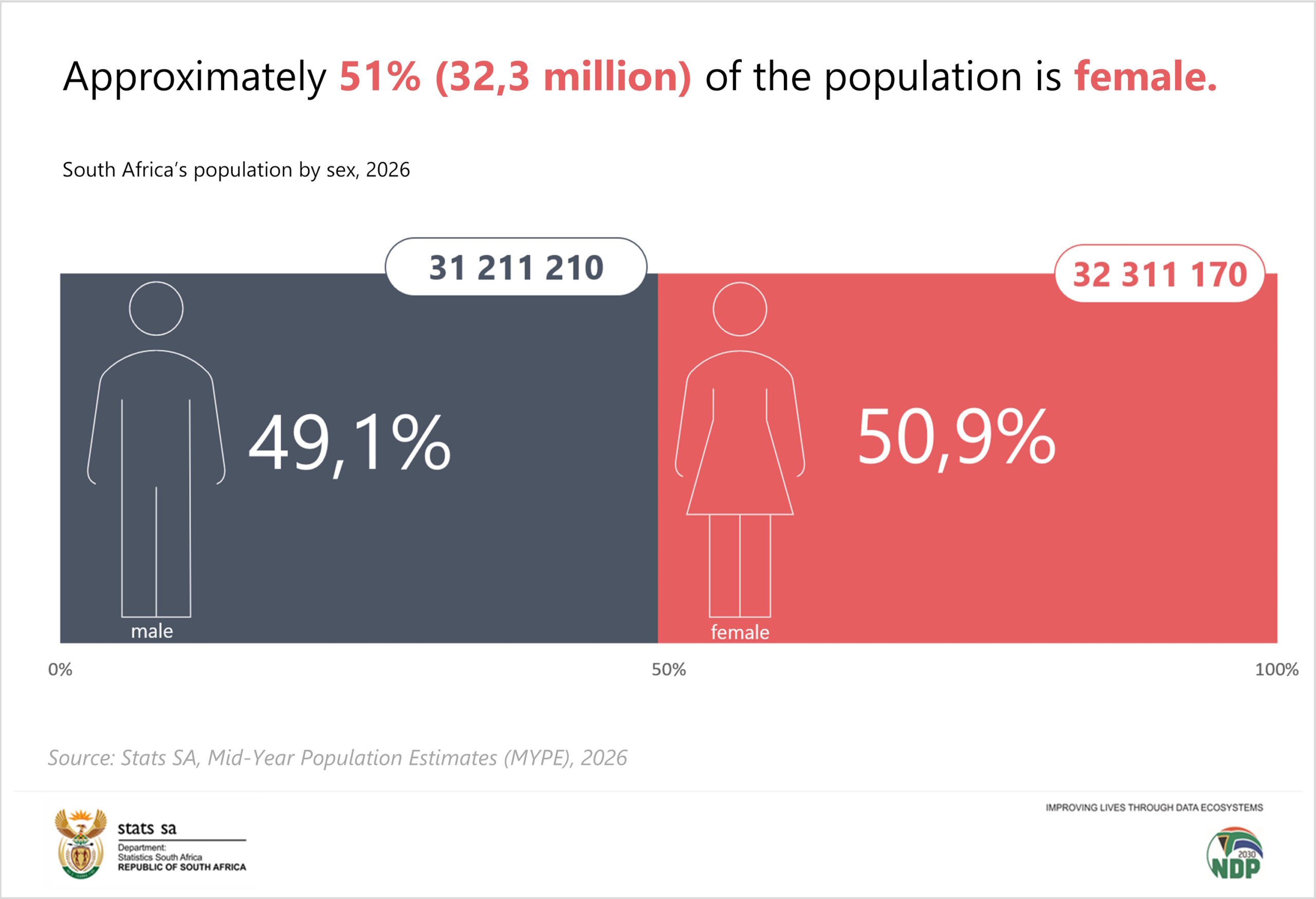
In 2026, there are an estimated 103 male births for every 100 female births. However, this advantage at birth does not persist throughout life. Men generally experience higher mortality than women, while females continue to have a higher life expectancy at birth. Over time, these differences result in a larger female population.
South Africa’s population continues to grow despite declining fertility
South Africa continues to show growth with an annual population increase of 1,2% between 2025 and 2026. Population growth is driven by three main factors: births, deaths and migration. However, the rate of natural increase looks only at the difference between births and deaths, excluding the effect of migration.
Across the world, the rate of natural increase has been declining as fertility rates have fallen. In many countries, fertility has dropped below the replacement level of around two children per woman, raising concerns about ageing populations, shrinking workforces and the long-term sustainability of population growth.
While South Africa’s rate of natural increase has also declined over time, the country continues to experience overall population growth.
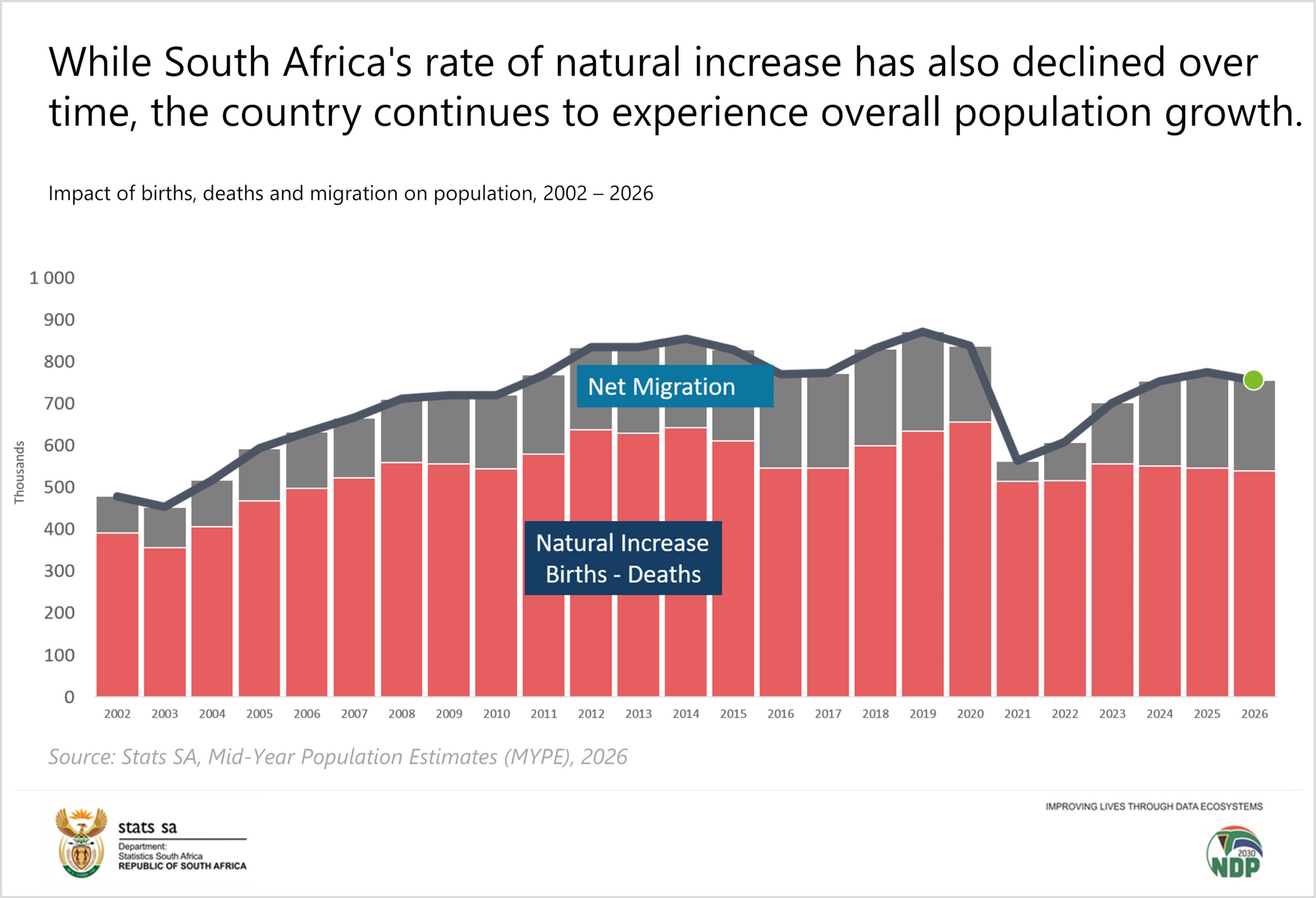
South Africa’s relatively youthful population plays an important role in sustaining population growth. Although women are having fewer children than in previous generations, there are still many women of childbearing age. Combined with improving female life expectancy, this means that the country continues to record enough births to support population growth.
In simple terms, South Africa is still having enough babies for the population to replace itself over time.
Demographers use several measures to understand whether a population is growing, stable, or shrinking. These include the number of births each year, the average number of children women have, and the balance between births and deaths.
By 2026 the average number of children a women will have in her lifetime is 2,12. This is close to the level needed for one generation to replace itself. The country also experiences a crude birth rate of 17 births per 1000 population.
One useful measure of population growth is the ratio of occurring births to births needed (B0/Bn). This compares the number of babies being born with the number of births needed to replace people who die under current mortality levels.
In South Africa, this ratio is still above 2. This translates to more than twice as many births as are needed to replace the expected deaths.
The ratio has changed over time because both births and deaths change. During the COVID-19 pandemic, deaths increased sharply, especially in 2021, which affected the ratio. As mortality returned closer to normal levels after the pandemic, the ratio also adjusted.
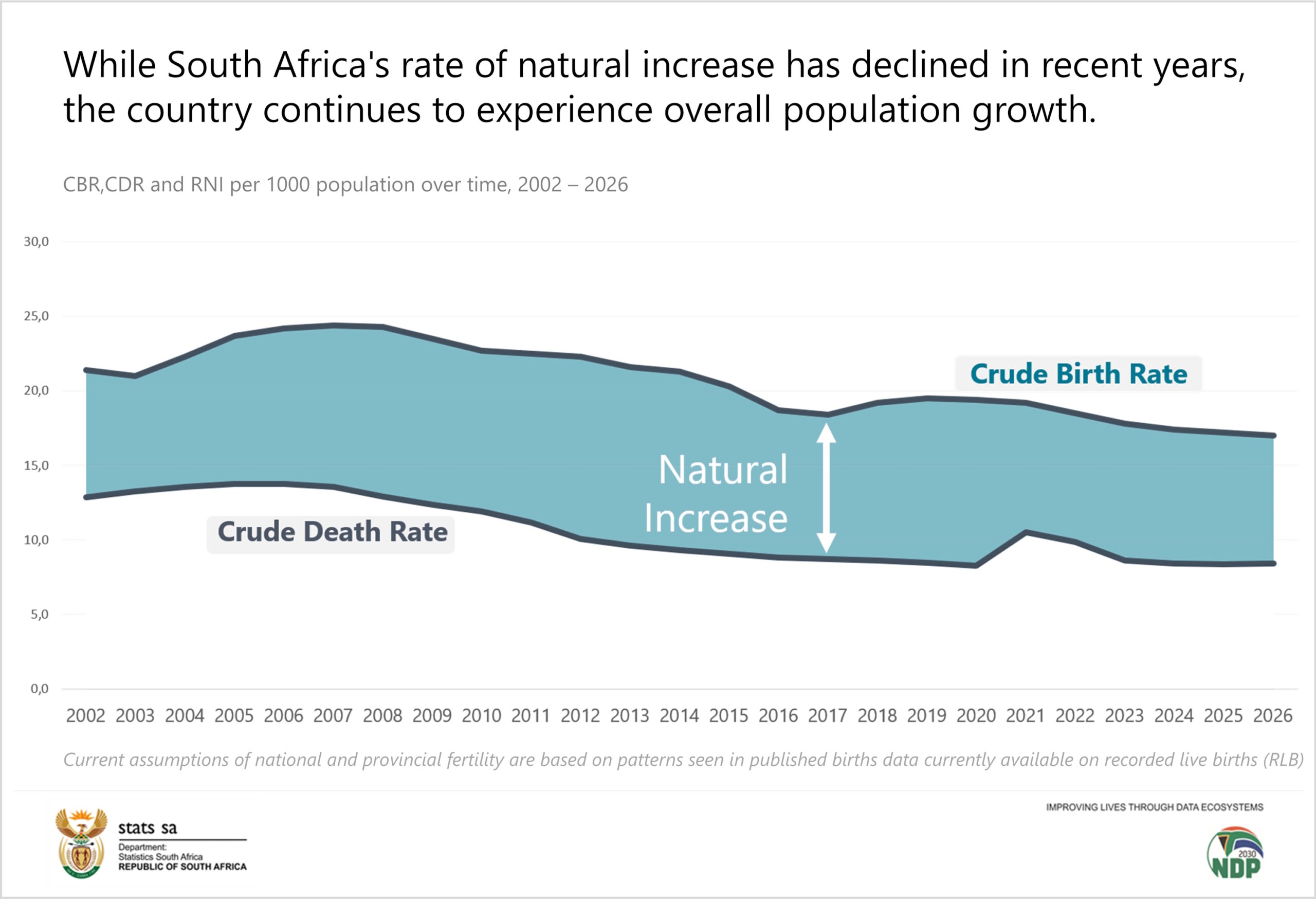
The above suggests that the population remains on a sustainable long-term growth path. However, this occurs within a context of declining fertility, with South Africa following the global trend towards smaller family sizes.
For more information, download the full report here.