

According to the Quarterly Labour Force Survey (QLFS), South Africa’s working-age population stood at 42,2 million individuals aged 15-64 in the first quarter of 2026, up by 121 000 compared to quarter 4 of 2025. This represents the backbone of South Africa’s economy, yet its true potential is concentrated in a notably young demographic. Of the 42,2 million individuals in the working-age population, 21,0 million (i.e. 49,7%) were aged 15-34 years. Despite their large share of the population, youth labour market outcomes remain unfavourable. In Q1:2026, 5,6 million young people aged 15-34 were employed, while 4,7 million were unemployed and the remaining 10,6 million were outside the labour force.
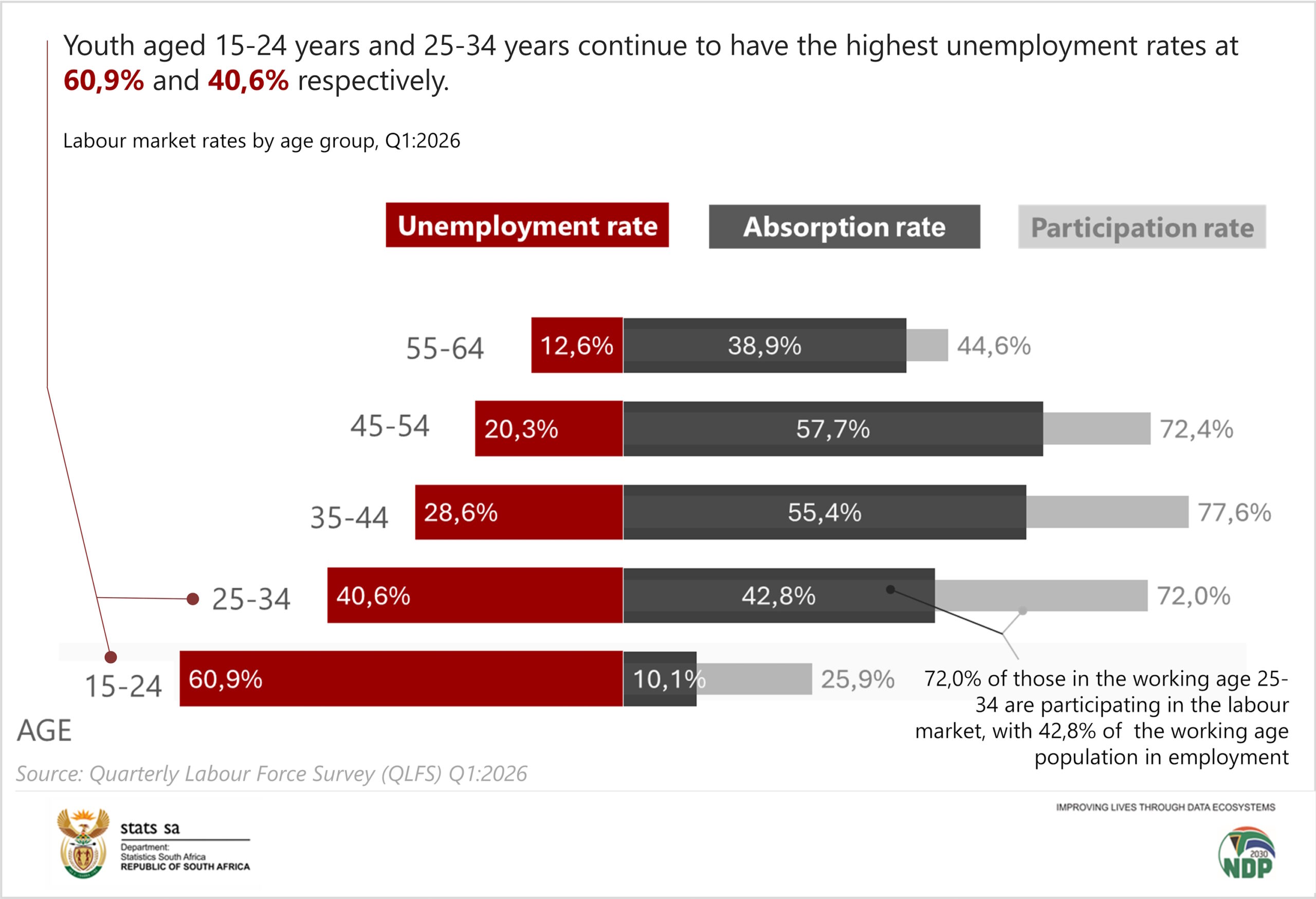
While the national unemployment rate stood at 32,7% in Q1:2026, the burden was disproportionately carried by the youth, with those aged 15-24 facing the highest unemployment rate at 60,9%, followed by those aged 25-34 at 40,6%.
Young people are not only more likely to be unemployed but are also far less likely to be in employment relative to their share of the working-age population. Their absorption and participation rates continue to be lower than those of adults, while their unemployment rate remains significantly higher, creating a persistent disadvantage for the youth. The absorption rate, which measures the share of the working-age population that is employed, highlights an unmet need for youth inclusion in the labour market. Among those aged 15-24, the absorption rate was 10,1%, the lowest of any age group in Q1:2026. While the participation rate for youth aged 25-34 was high at 72,0%, with an absorption rate of 42,8% pointing to a gap of 29,2 percentage points between those actively participating in the labour market and those who were employed.
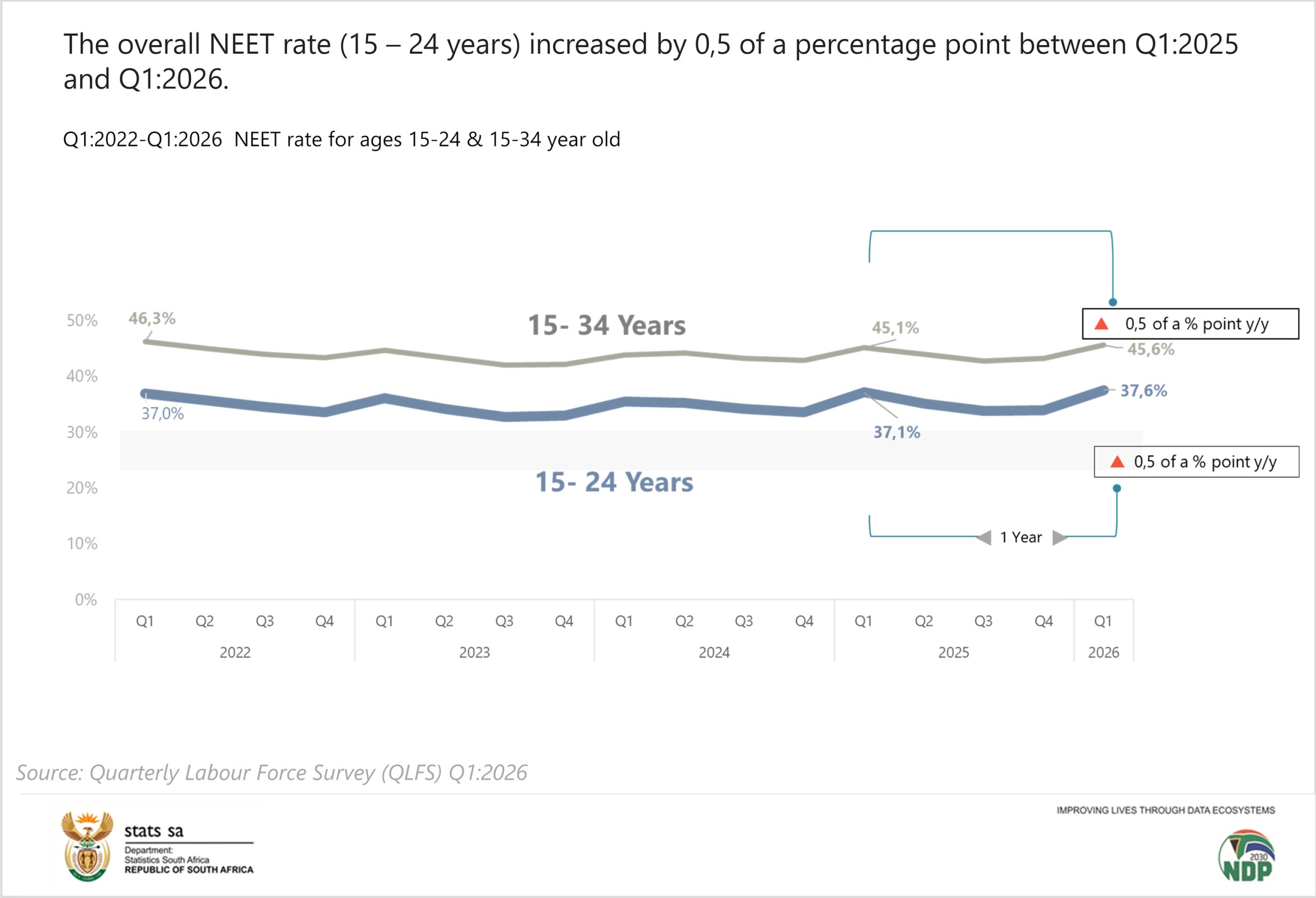
The challenges facing young people extend beyond those actively searching for work and include a growing share of those who are not in employment, education or training (NEET). While unemployment rates capture those who are looking and available for work, the NEET rate provides a broader measure of youth who are disengaged from both the labour market and the education system.
In Q1:2026, approximately 3,9 million out of 10,3 million (or 37,6%) young people aged 15-24 were NEET. The year-on-year comparison shows a rising vulnerability among young people. The NEET rate for both the 15-24 years and the broader 15-34 years age groups increased by 0,5 of a percentage point between Q1:2025 and Q1:2026, reaching 37,6 % and 45,6% in Q1:2026, respectively. More than four in ten young people aged 15-34 were not in employment, education or training in Q1:2026.
Young women bear a heavier burden
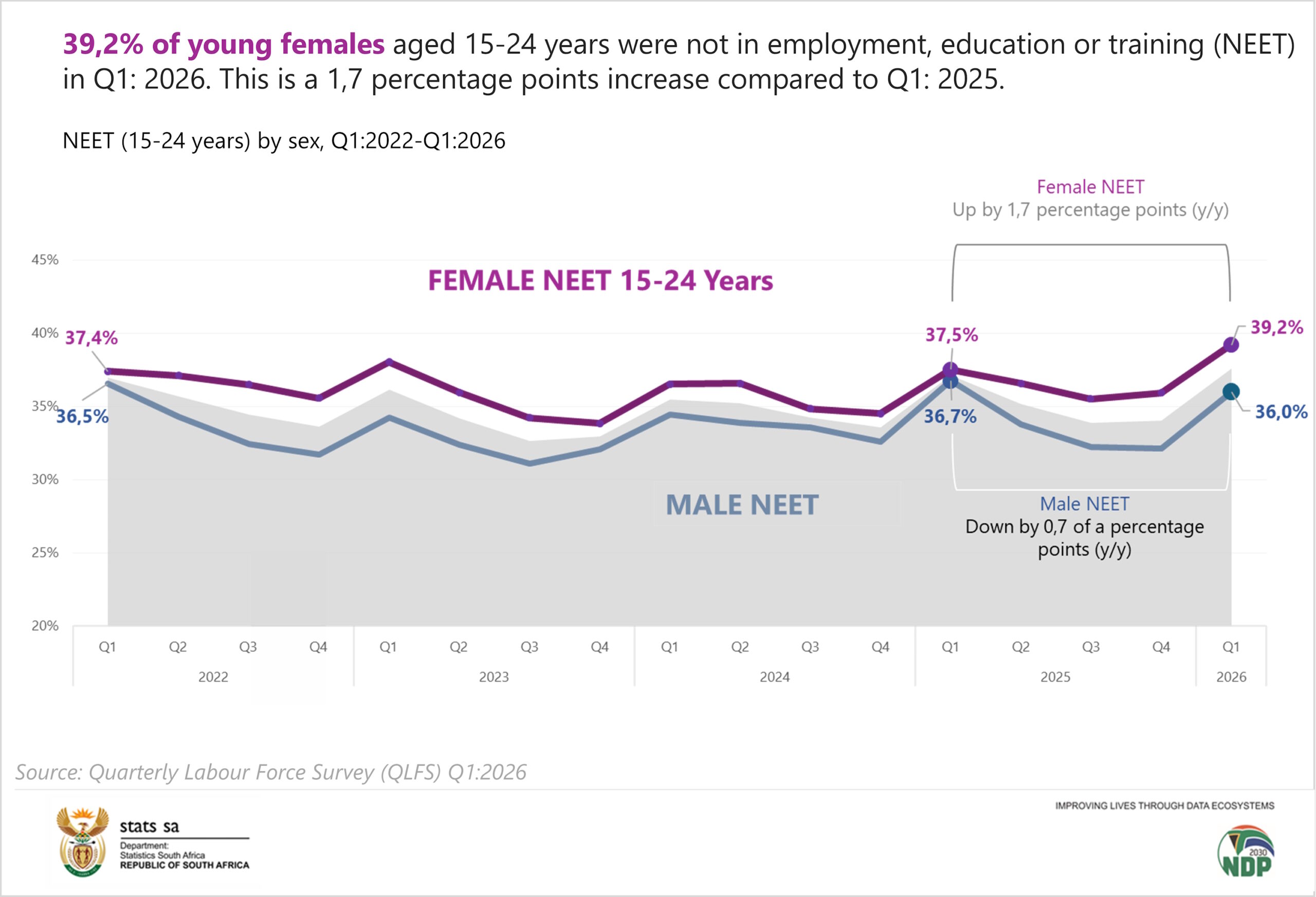
The NEET burden is not shared equally, as young women consistently face a higher risk of disengagement than young men. In Q1:2026, 39,2% of young females aged 15-24 years were NEET. This is a 1,7 percentage points increase compared to Q1: 2025. Over the same period, the NEET rate for young men fell by 0,7 of a percentage point from 36,7% in Q1:2025 to 36,0% in Q1:2026. The female NEET rate has remained consistently above the male rate for years with the gap reaching 3,2 percentage points in Q1:2026. While young men are edging toward the labour market, young women are moving further away from it.
Where young people work and the occupations they hold
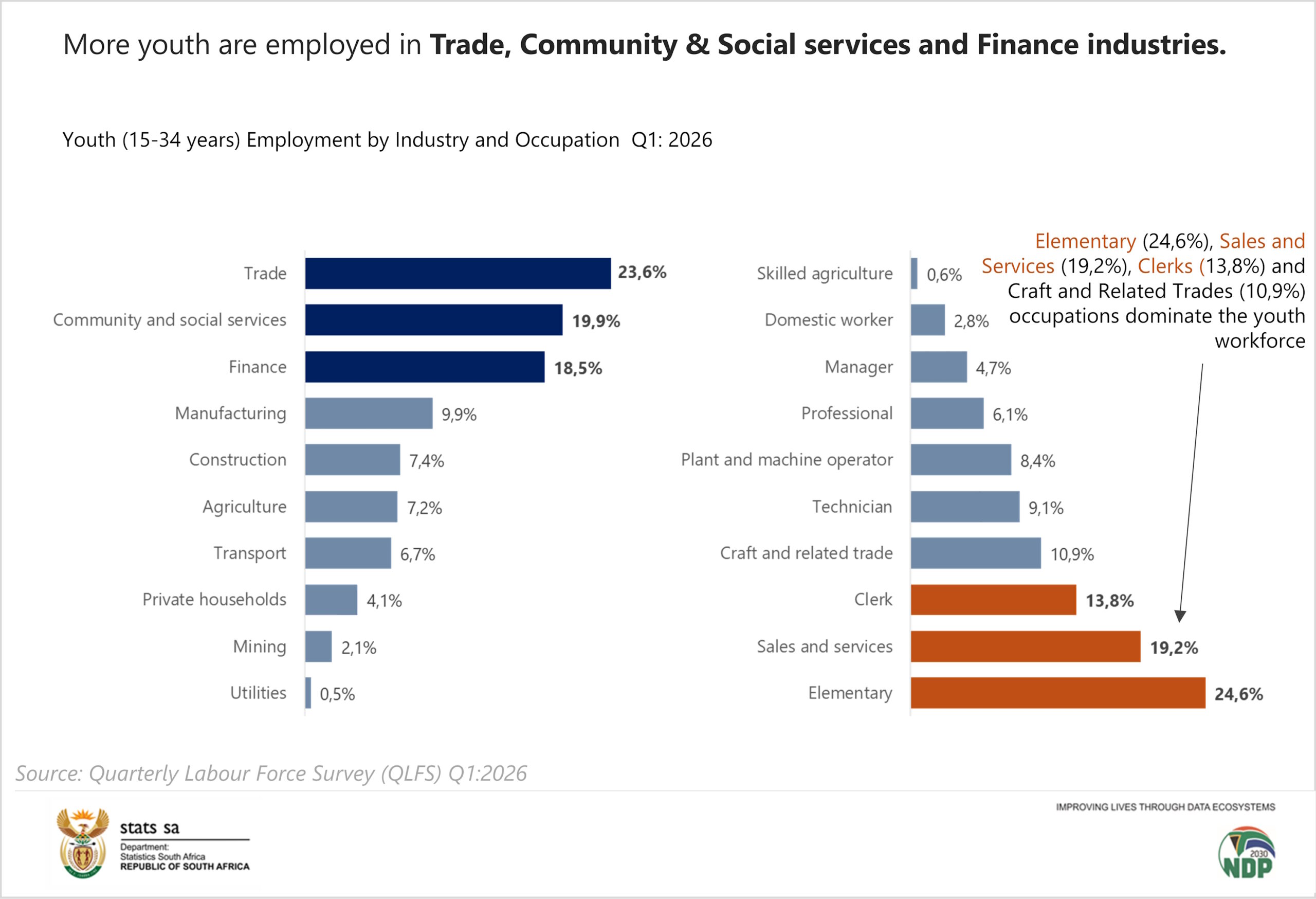
Young people aged 15-34 who are employed remain concentrated in service-related industries and low to semi-skilled occupations. In Q1:2026, trade was the largest employer of youth, accounting for nearly one in four jobs (23,6%), followed by community and social services (19,9%) and finance (18,5%). In terms of occupations, elementary occupations accounted for the largest share of youth employment at 24,6%, followed by sales and services occupations (19,2%) and clerks (13,8%). By contrast, relatively fewer young people were employed in higher-skilled occupations such as managers (4,7%), professionals (6,1%) and technicians (9,1%).
For more information, download the QLFS Q1:2026 report here.