Several energy sources drive our economy. A recent report on the electricity, gas & water supply industry provides insight into the structure of electricity supply and use.
Where does our electricity come from?
Coal continues to be the primary source of fuel, driving 83% of local electricity generation in 2024 (see Figure 1 below). South Africa also uses other non-renewable sources, such as nuclear and diesel. The nation benefited from 9 200 gigawatt-hours (GWh) imported from other countries.
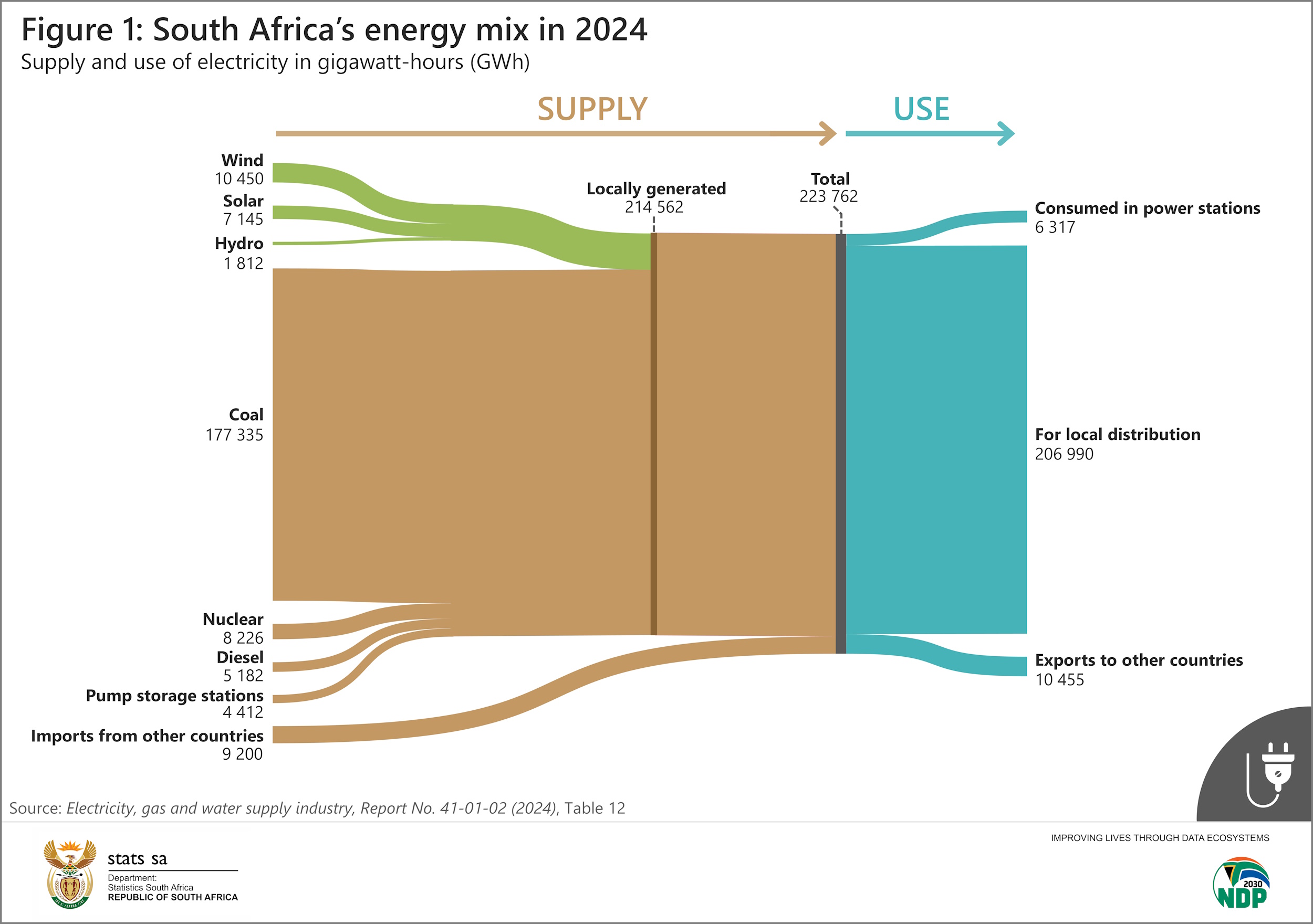
Renewable energy (including wind, solar and hydro) accounted for 9% of local production. Wind power supplied over half of the electricity generated by renewable sources in 2024, making it the most prominent form of green energy.
Wind made notable headway. It was the fastest-growing source of renewable energy over a three-year period, increasing generation from 6 512 GWh in 2021 to 10 450 GWh in 2024. This represents annual growth of 17,1%. Wind was only outpaced by diesel, which grew by 34,5% per annum over the same period.
Renewables nipping at coal’s heels
Coal is overwhelmingly dominant, but its influence has slowly waned. The mineral was responsible for supplying 90% of electricity in 2016. This declined to 87% in 2021 and 83% in 2024. Renewable sources have slowly expanded their foothold over the same period, rising from just 2% of generated electricity in 2016 to 6% in 2021 and 9% in 2024.
Where does our electricity go?
Once electricity is produced, it is either distributed locally, used in power stations, or exported to other countries. Local distribution accounts for the bulk of demand, according to Figure 1.
A breakdown of local distribution in gigawatt-hours is not included in the report. However, data on electricity sales by type of customer provide insight into electricity delivery across the country.
Redistributors accounted for the largest share (44%) of electricity sales in 2024 (see Figure 2 below). Redistributors include municipalities, who buy electricity from Eskom and then resell the power to households, industry, businesses and government.
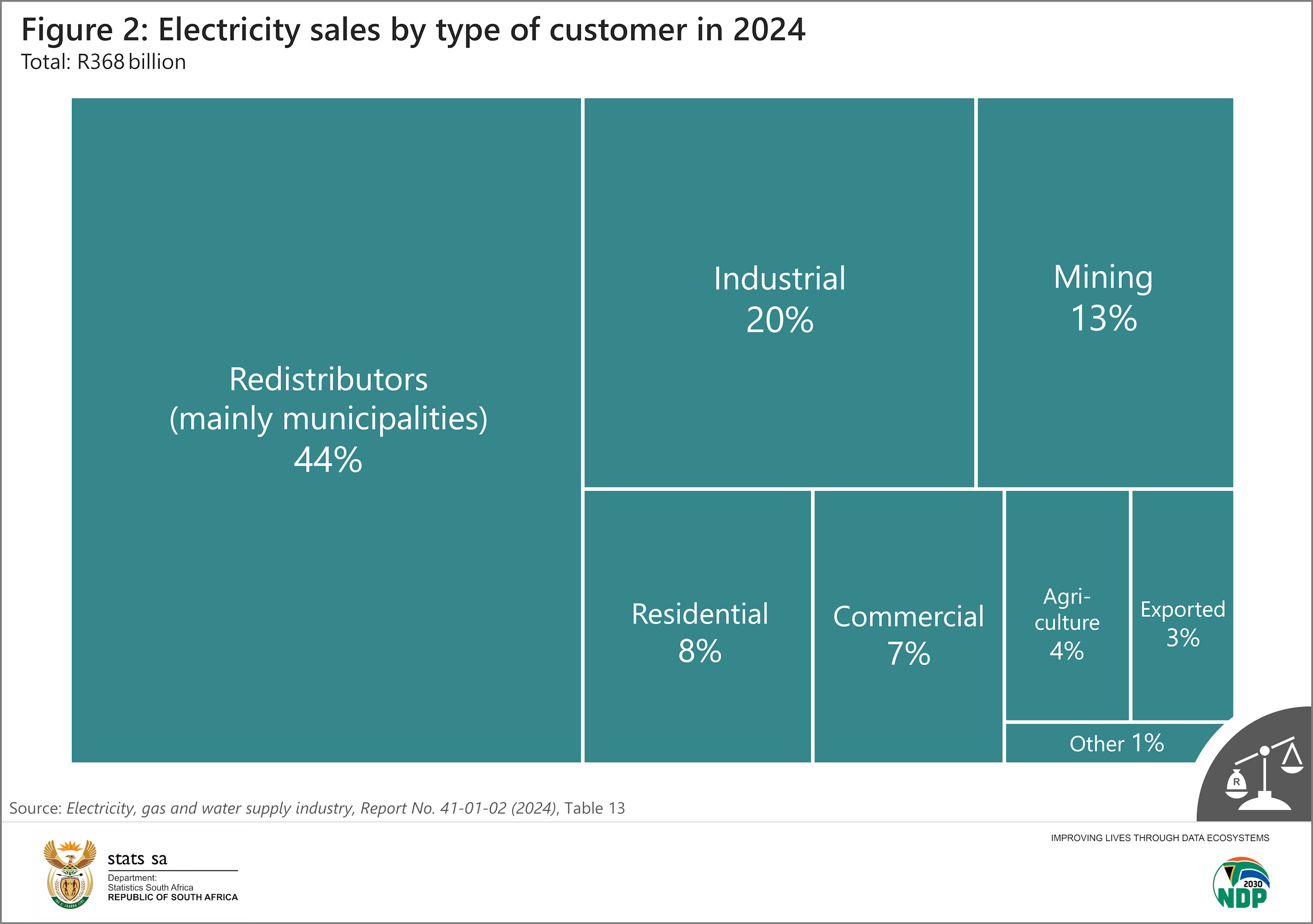
Direct sales to customers accounted for the remaining 56%, with industrial and mining the largest contributors.
In a nutshell, what does the above tell us about the supply and use of electricity in South Africa? Firstly, coal continues to dominate the country’s energy mix, although its prominence has weakened over the years as renewables have slowly gained ground. Secondly, wind power has grown noticeably since 2021. Thirdly, electricity redistributors (mainly municipalities) account for the bulk of electricity sales.
The Electricity, gas and water supply industry, 2024 statistical report includes other details of this important industry. Other key results:
For more information, download the report, presentation and associated Excel files here.
Similar articles are available on the Stats SA website and can be accessed here.
For a monthly overview of economic indicators and infographics, catch the latest edition of the Stats Biz newsletter here.