
Real gross domestic product (GDP) expanded by 0,5% in the third quarter (July–September) of 2025.1 This follows a revised increase of 0,9% in the second quarter and marks the fourth consecutive rise in economic activity.
Mining grows the most
Nine of the ten industries on the production (supply) side of the economy were stronger in the third quarter, with mining & quarrying; agriculture, forestry & fishing; and trade, catering & accommodation recording the highest growth rates (Figure 1).
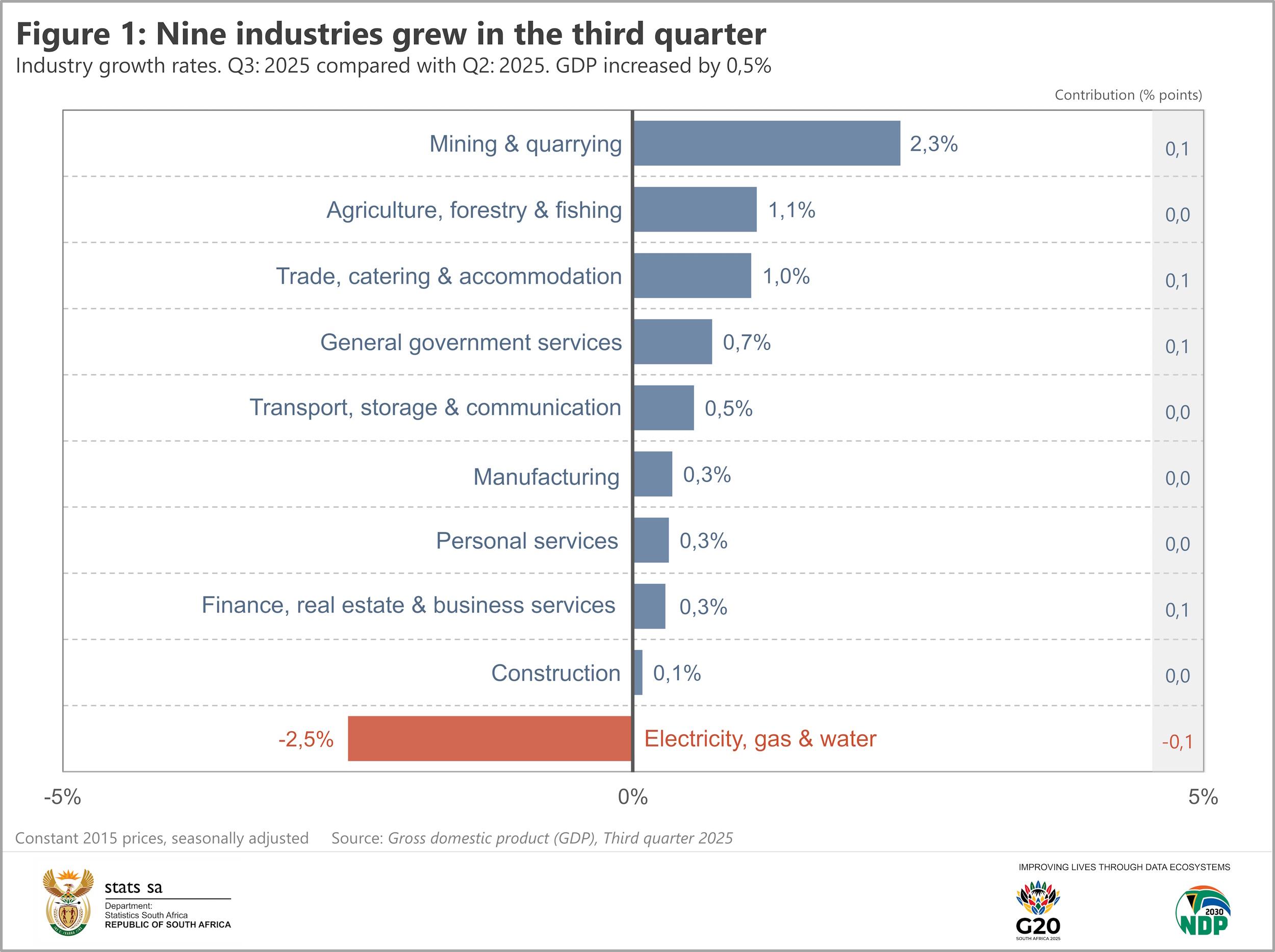
Mining output increased by 2,3%, driven predominantly by platinum group metals, with support from manganese ore, coal, chromium ore and copper. There was a decline in iron ore, diamonds, nickel and gold, but this was not enough to cause a significant dent in overall growth.
Agriculture carried over its positive momentum, recording its fourth consecutive increase. The 1,1% rise in the third quarter was underpinned by stronger production of field crops, horticulture and animal products.
The trade, catering & accommodation industry also registered its fourth consecutive quarter of growth. Positive gains were recorded across the board, with stronger wholesale trade, retail trade, motor trade, accommodation and food & beverages.
General government was also positive, pulled higher by increased employment in national and provincial government and in extra-budgetary institutions.
A rise in air transport, communication and transport support services supported the 0,5% increase in the transport, storage & communication industry.
Construction turned positive after three consecutive quarters of decline, recording a marginal rise of 0,1%. Its positive showing was underscored by growth in non-residential buildings and construction works.
Electricity, gas & water was the only industry that disappointed in the third quarter, shrinking by 2,5%. This was due to lower electricity production and usage. Water consumption was also lacklustre, contributing to the industry’s poor performance.
Household consumption records a sixth consecutive rise
The expenditure (demand) side of the economy was lifted by stronger gross fixed capital formation, household consumption, exports and government consumption (Figure 2).
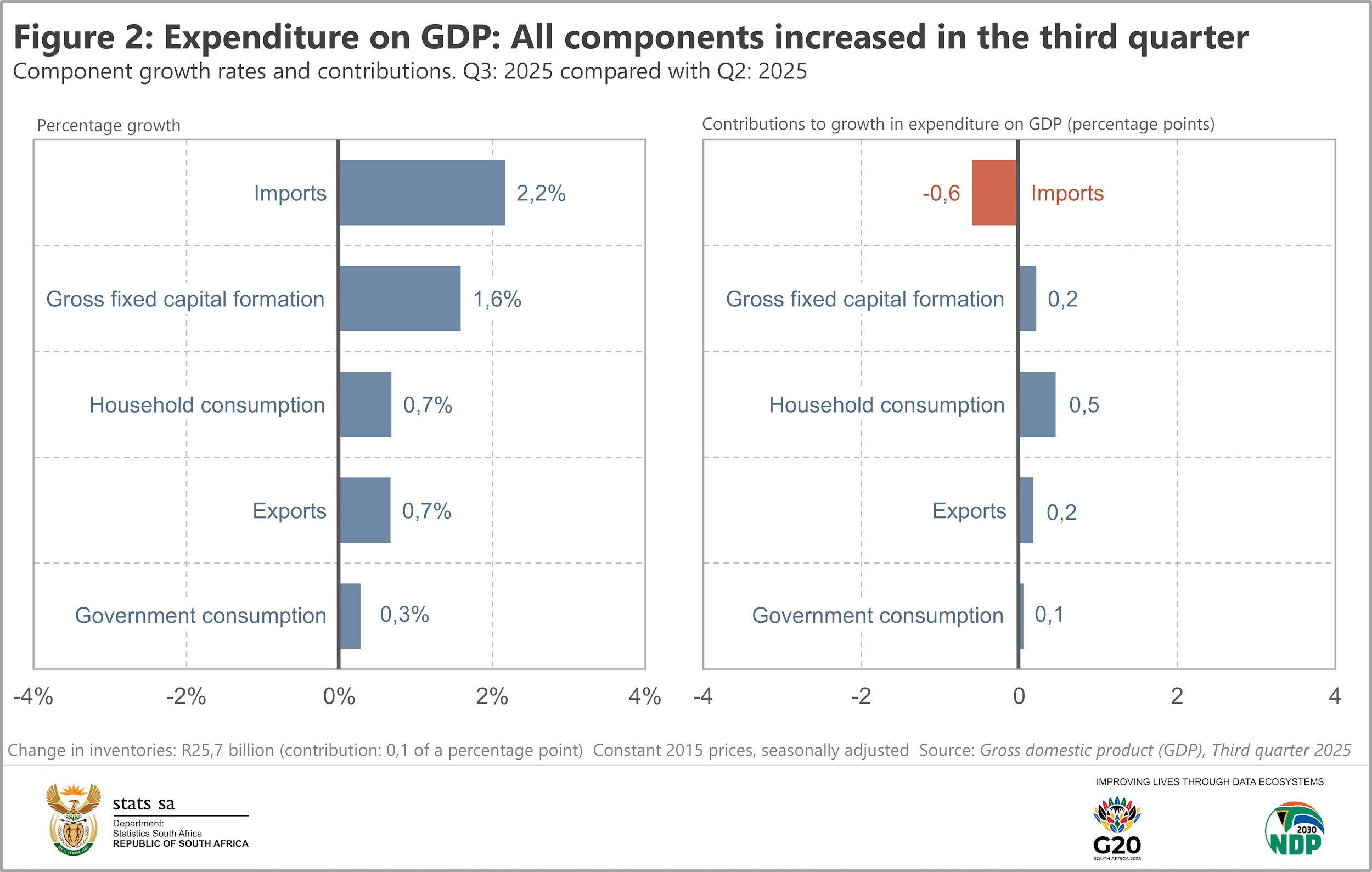
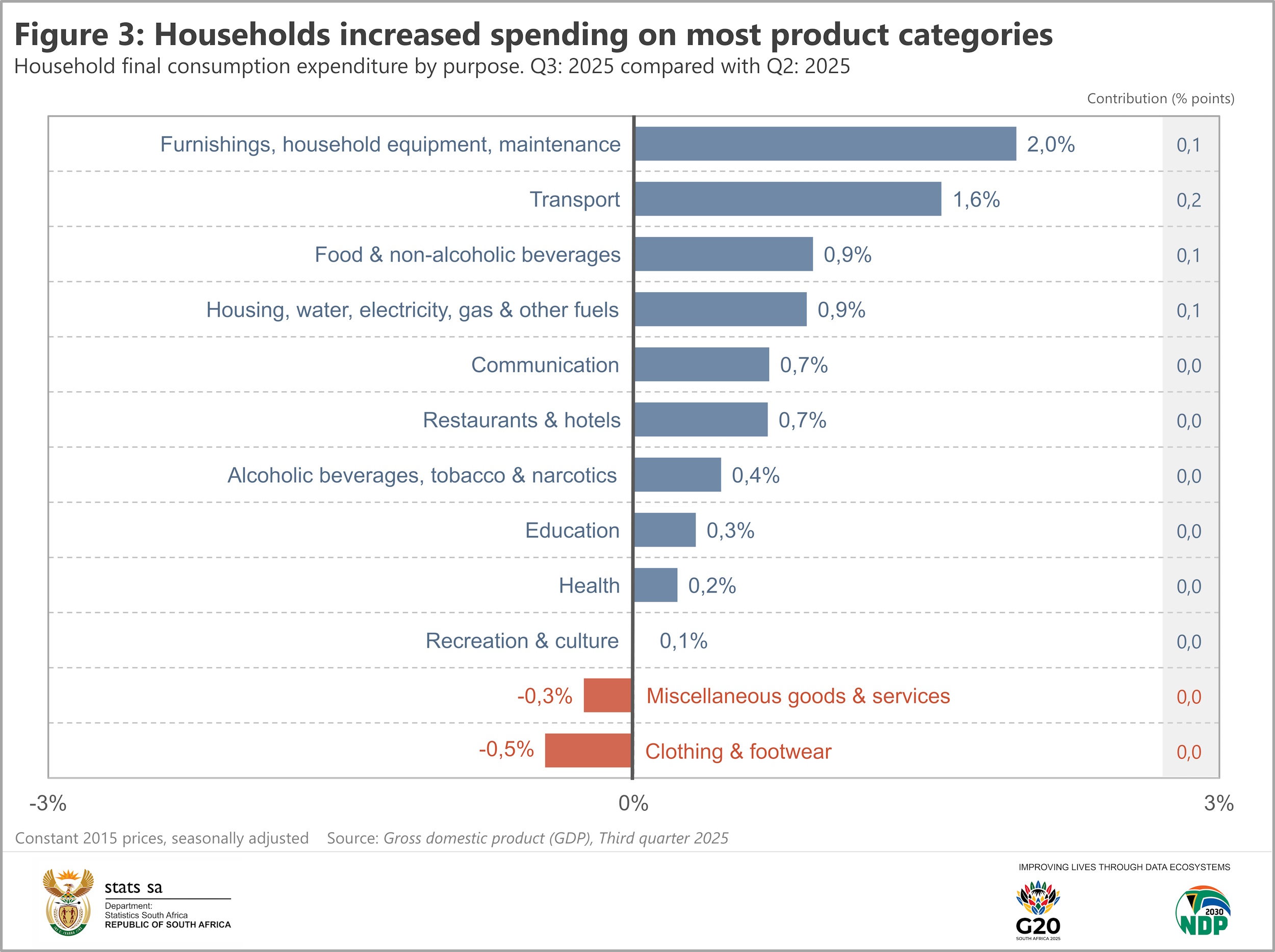
Household spending expanded for a sixth consecutive quarter, rising by 0,7%. Transport was the largest positive contributor, pushed higher mainly by a rise in new vehicle sales. The categories of clothing & footwear and miscellaneous goods & services recorded a decline (Figure 3).
After three consecutive quarters of decline, gross fixed capital formation (spending on infrastructure and other fixed assets) expanded by 1,6%. Its rise was mainly driven by increased investment in transport equipment. The miscellaneous category ‘other assets’ was also a significant positive contributor, supported mainly by increased investments in ICT equipment and software.
South African exports rose by 0,7%, primarily led by increased trade in vegetable products and mineral products. Imports were up by 2,2%, mainly influenced by a rise in the trade of machinery & electrical equipment; mineral products; textiles & textile articles; and animal & vegetable fats and oils.
For more information, download the latest GDP release, media presentation and Excel files here.
1 The quarter-on-quarter rates are seasonally adjusted and in real (volume) terms (constant 2015 prices).
Similar articles are available on the Stats SA website and can be accessed here.
For a monthly overview of economic indicators and infographics, catch the latest edition of the Stats Biz newsletter here.