Behind every statistic is a story — and South Africa’s population tells a powerful one. From shifting demographics to growing numbers, here are six revealing snapshots from the Mid-Year Population Estimates, 2025 (MYPE) report, that shows who we are right now.
1.South Africa’s Population Hits 63,1 Million in 2025
South Africa’s mid-year population is estimated at 63,1 million in 2025, according to the latest figures.
The majority of the population is Black African, with about 51,6 million people — roughly 82% of the total population. The white population is estimated at 4,5 million, while 5,3 million people identify as coloured and 1,6 million as Indian or Asian.
Women slightly outnumber men, with females accounting for 51% of the population — approximately 32,2 million.
Gauteng remains the most populated province, home to around 16,1 million people, making up 25,5% of the national population. KwaZulu-Natal follows with about 12,2 million residents (19,4%). GP has increased its share of the total population by more than 6 million between 2002 and 2025.
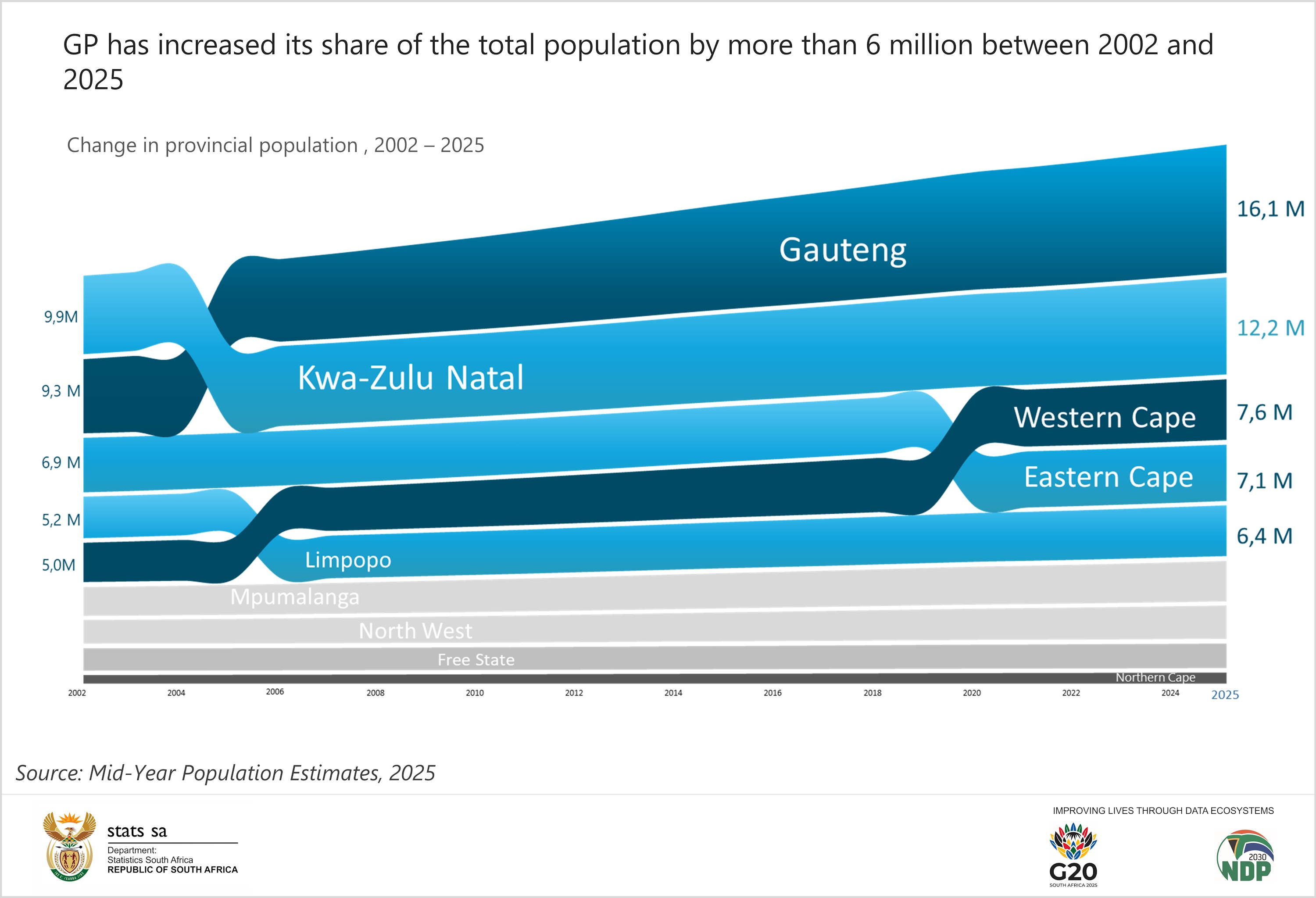
On the other end of the scale, the Northern Cape remains the least populated province, with an estimated 1,38 million people — just 2,2% of the country’s population.
2.South Africa’s Youthful Population Still Dominant, but Older Age Group Growing
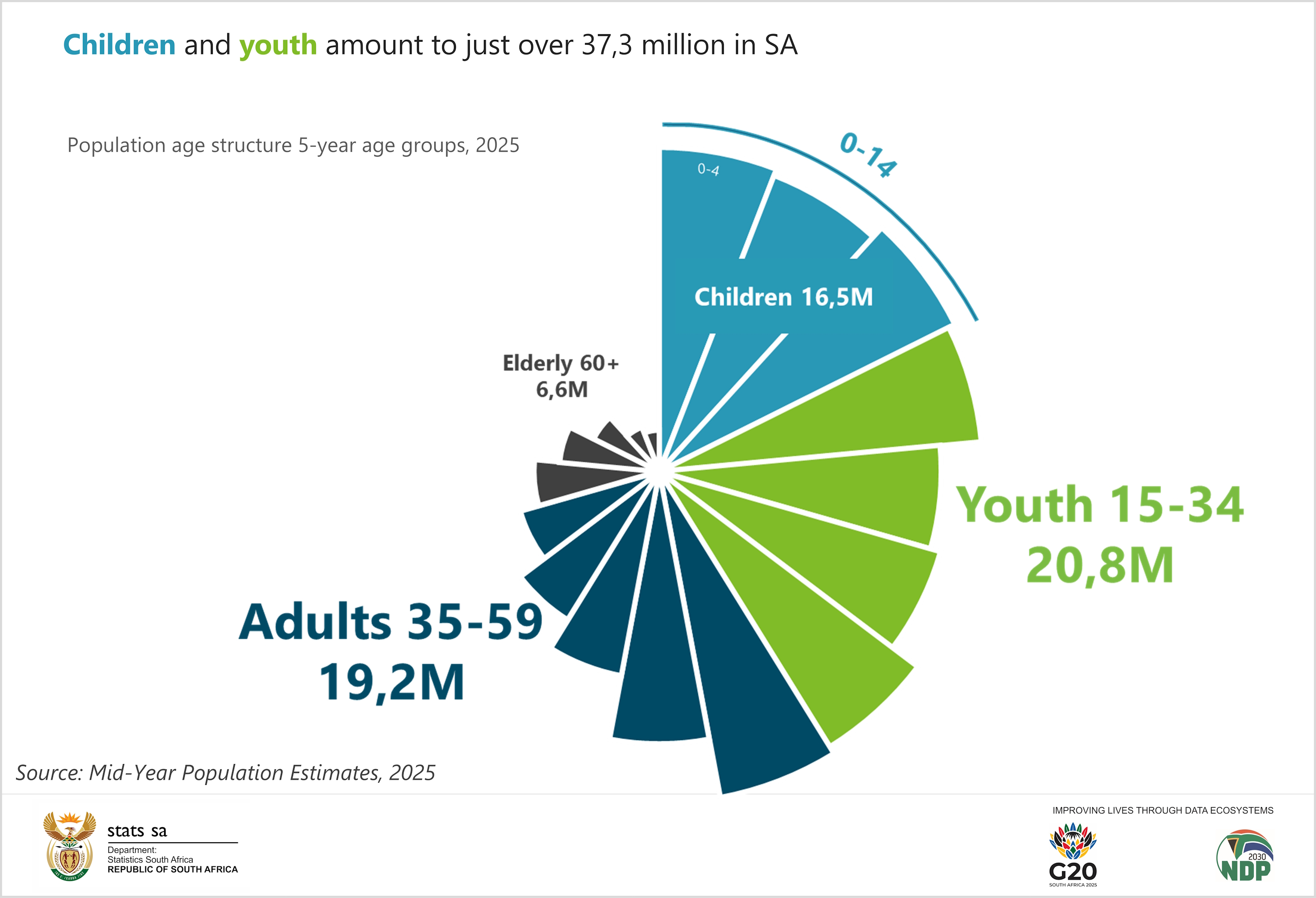
Children under the age of 15 make up about 26,2% of South Africa’s population — an estimated 16,5 million people. Meanwhile, around 10,5% of the population, or 6,6 million people, are aged 60 and older.
Limpopo and the Eastern Cape have the highest proportions of children under 15, at 31,8% and 30,2% respectively.
While the country remains relatively young, the proportion of elderly people is steadily rising — pointing to a gradual ageing of the population over time.
3.Fertility Rates Continue to Decline in South Africa
South Africa’s fertility rate has steadily declined over the years — from an average of 2,78 children per woman in 2008 to 2,21 in 2025. Total fertility rate (TFR) is the average number of children a woman would have in her lifetime if she had children at the current rates for each age group.
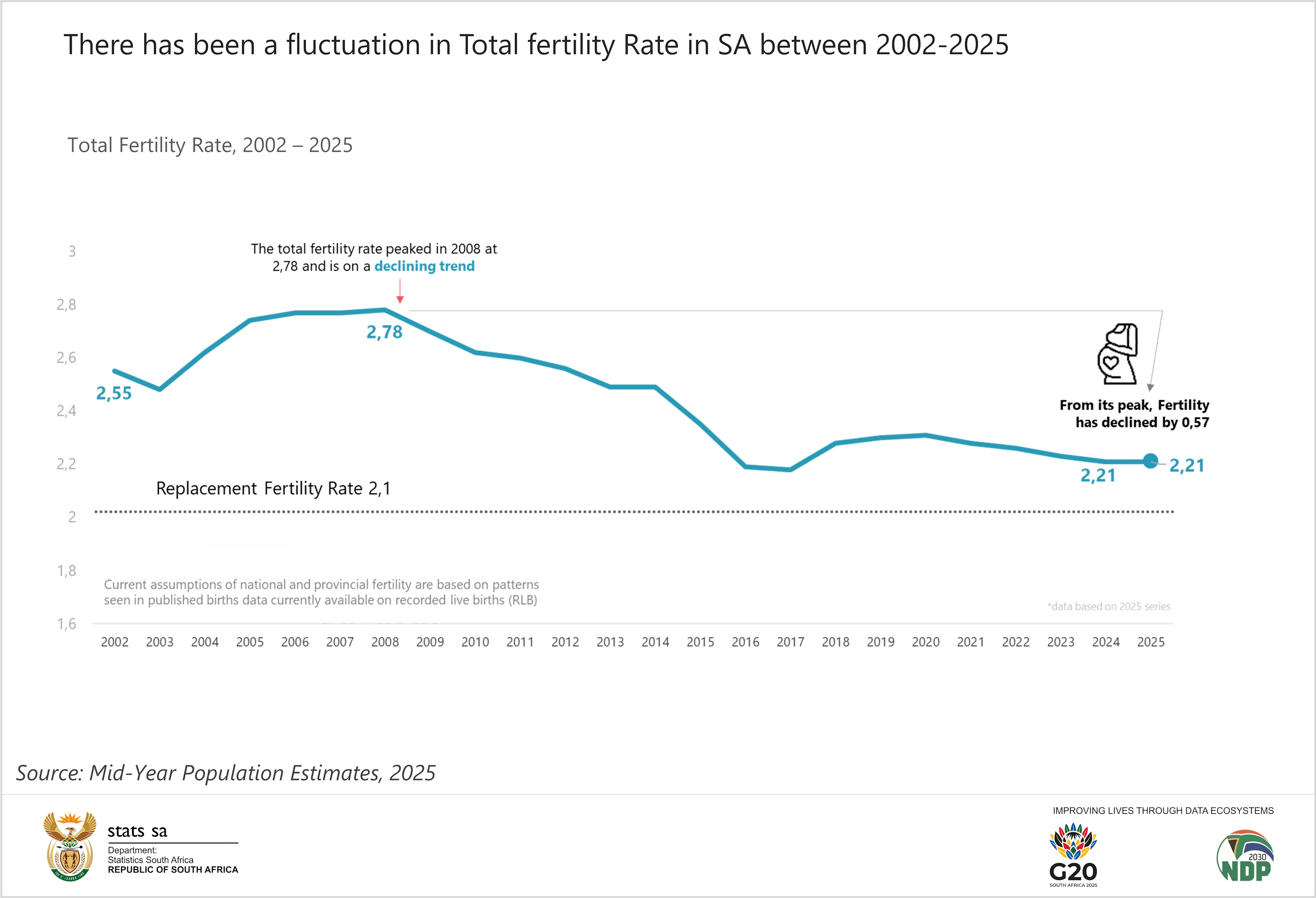
A noticeable dip in births around 2016 aligns with official birth registration records. More recent data shows that births have been dropping since 2020.
This downward trend is supported by information from health facilities, birth registrations, child grant access, and school enrolments — prompting a revision of fertility estimates to reflect what is seen in birth registration data in the District Health Information System (DHIS) and the recorded live births data (Stats SA, 2024; NDOH, 2025).
4.Life Expectancy Rises as Child Mortality Rates Drop
In 2025, life expectancy at birth in South Africa is estimated at 64,0 years for males and 69,6 years for females.
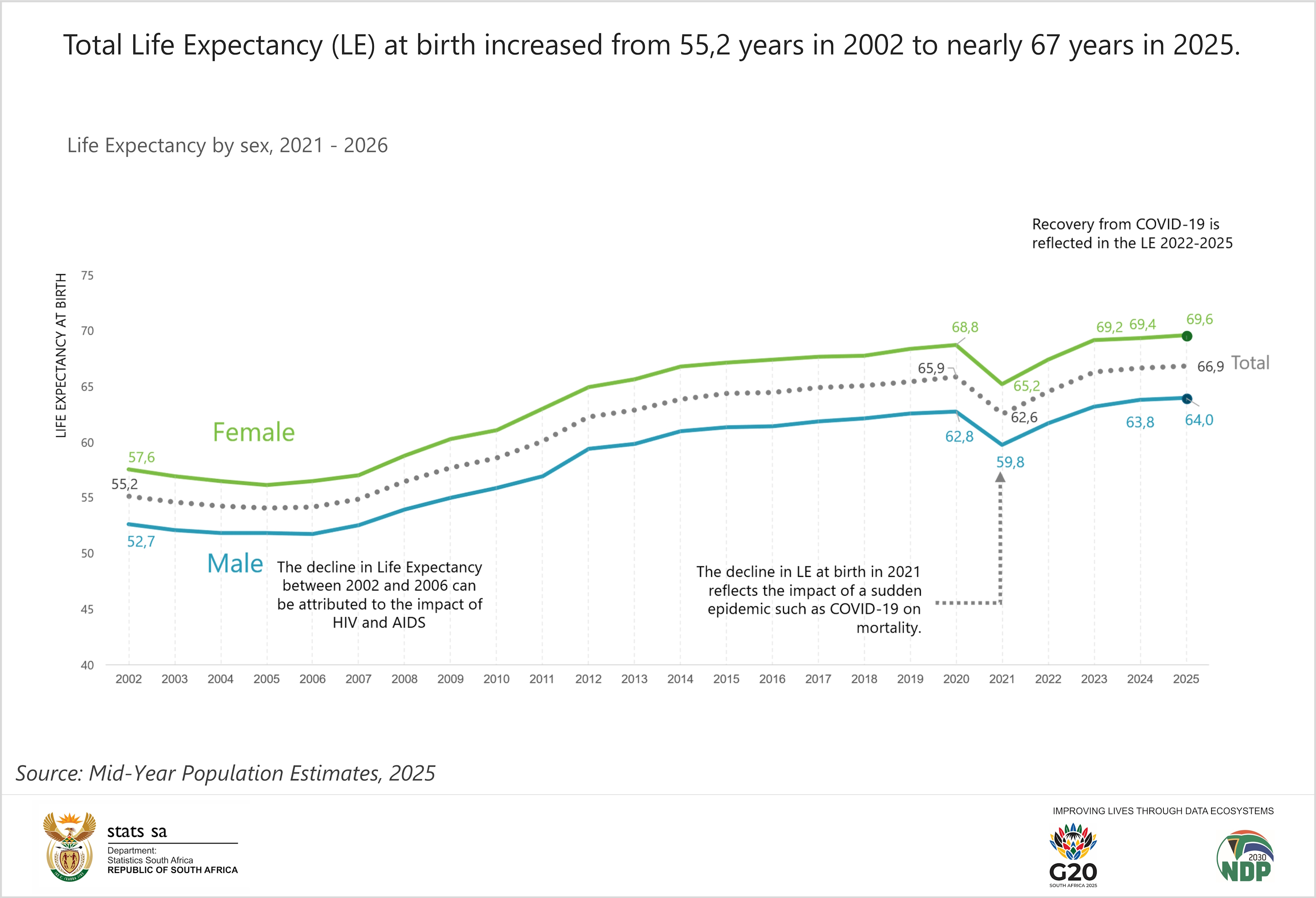
Improved access to HIV prevention and treatment, along with better healthcare and living conditions, has led to a sharp decline in child mortality.
The infant mortality rate has dropped from 61,9 deaths per 1,000 live births in 2002 to 23,1 in 2025. Similarly, the under-five mortality rate has fallen from 79,9 to 26,1 deaths per 1,000 live births over the same period.
5.Gauteng and Western Cape See Highest Inflows of Migrants
Migration trends continue to show that Gauteng and the Western Cape attract the highest number of in-migrants across all recorded periods.
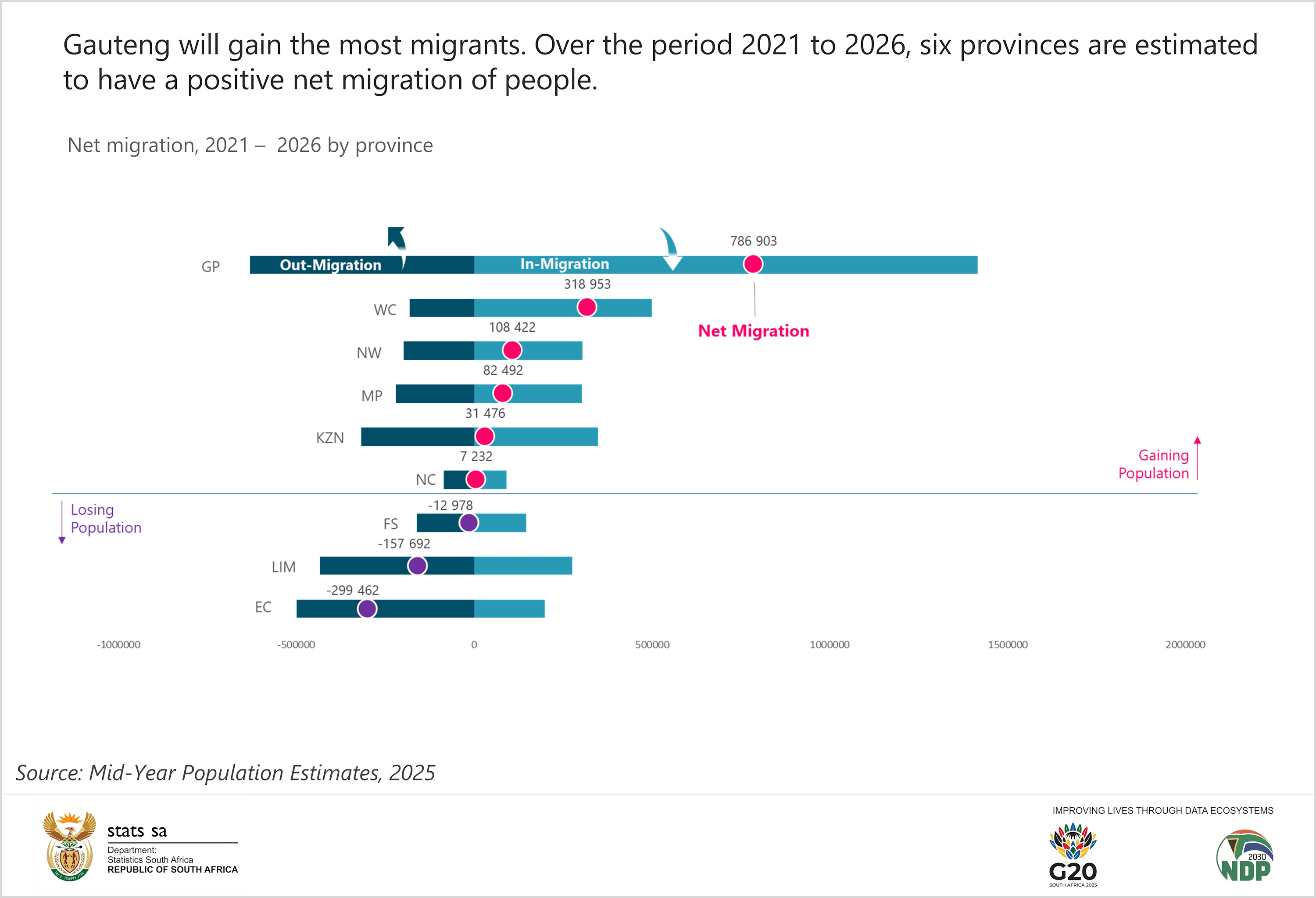
Between 2021 and 2026, Gauteng is expected to receive approximately 1,42 million migrants, while the Western Cape is set to welcome around 500,347 people.
The Eastern Cape, Limpopo, and Gauteng recorded the largest numbers of people moving out. Gauteng also tops the list for international migrants, followed by the Western Cape in second place for all periods.
6.HIV Still a Major Health Challenge, but Mortality Rates Show Signs of Recovery
In 2025, an estimated 8,15 million people in South Africa are living with HIV, accounting for approximately 12,9% of the total population. Among adults aged 15 to 49 — the most affected group — the HIV prevalence rate stands at an estimated 18,1%.
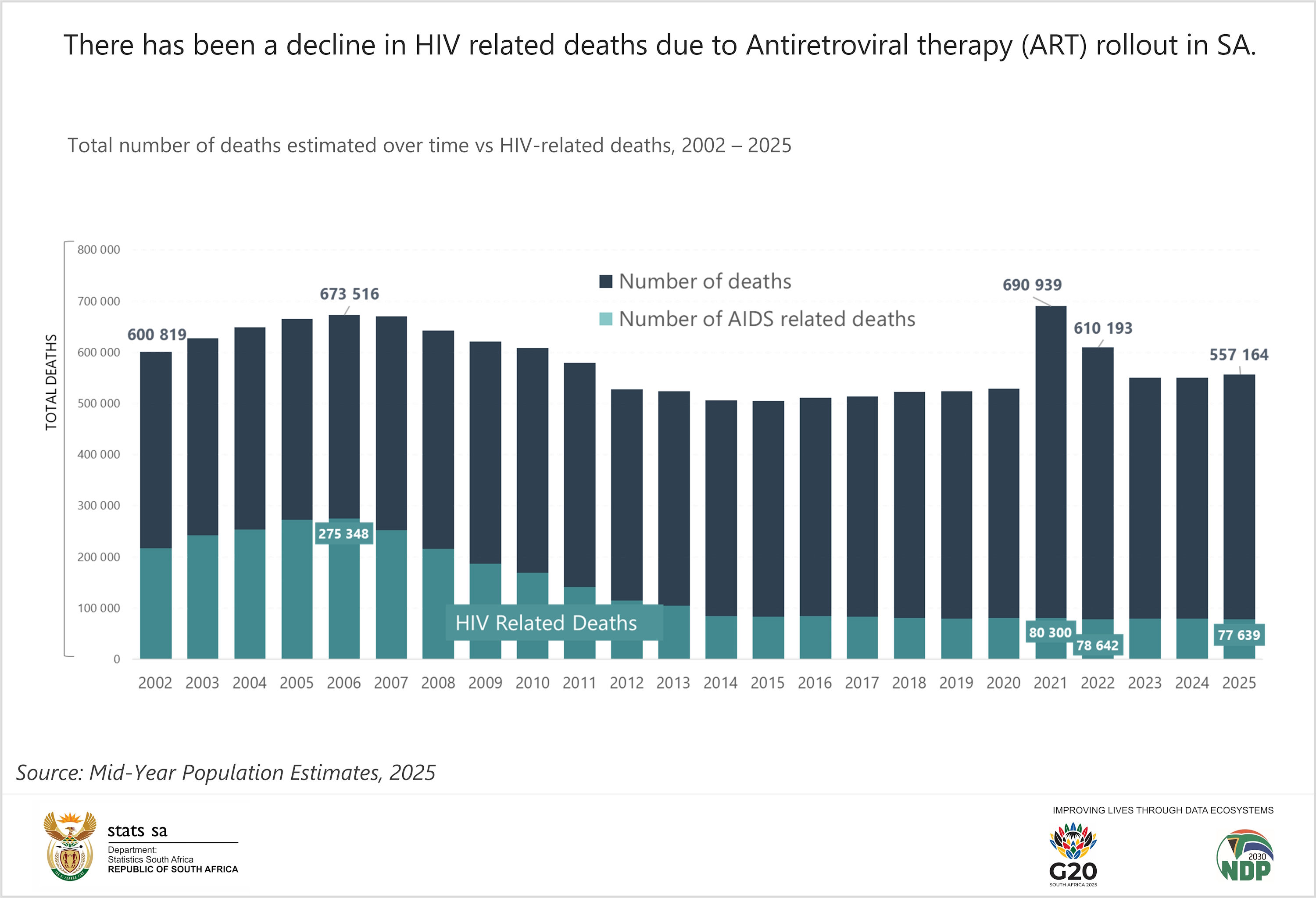
Despite these numbers, South Africa has made progress in reducing deaths linked to HIV and AIDS, thanks to expanded access to treatment and care.
The country’s crude death rate (CDR) — the number of deaths per 1,000 people — rose from 12,9 in 2002 to 13,8 in 2005 and 2006, largely due to the impact of the AIDS epidemic. As antiretroviral treatment became more widely available, the CDR began to decline, reaching 8,9 deaths per 1,000 people by 2020.
However, the arrival of COVID-19 caused a spike in mortality. The CDR rose to 11,5 in 2021. With the rollout of vaccines and improved treatment, the rate dropped again — back to 8,9 in 2023 and slightly lower at 8,8 deaths per 1,000 people in 2025.
These figures, drawn from the AIDS Impact Model (AIM), offer a glimpse into the evolving mortality trends in South Africa, shaped by both long-standing challenges like HIV and new crises such as the COVID-19 pandemic.
For more information, download the Mid-Year Population estimates, 2025 report here.