


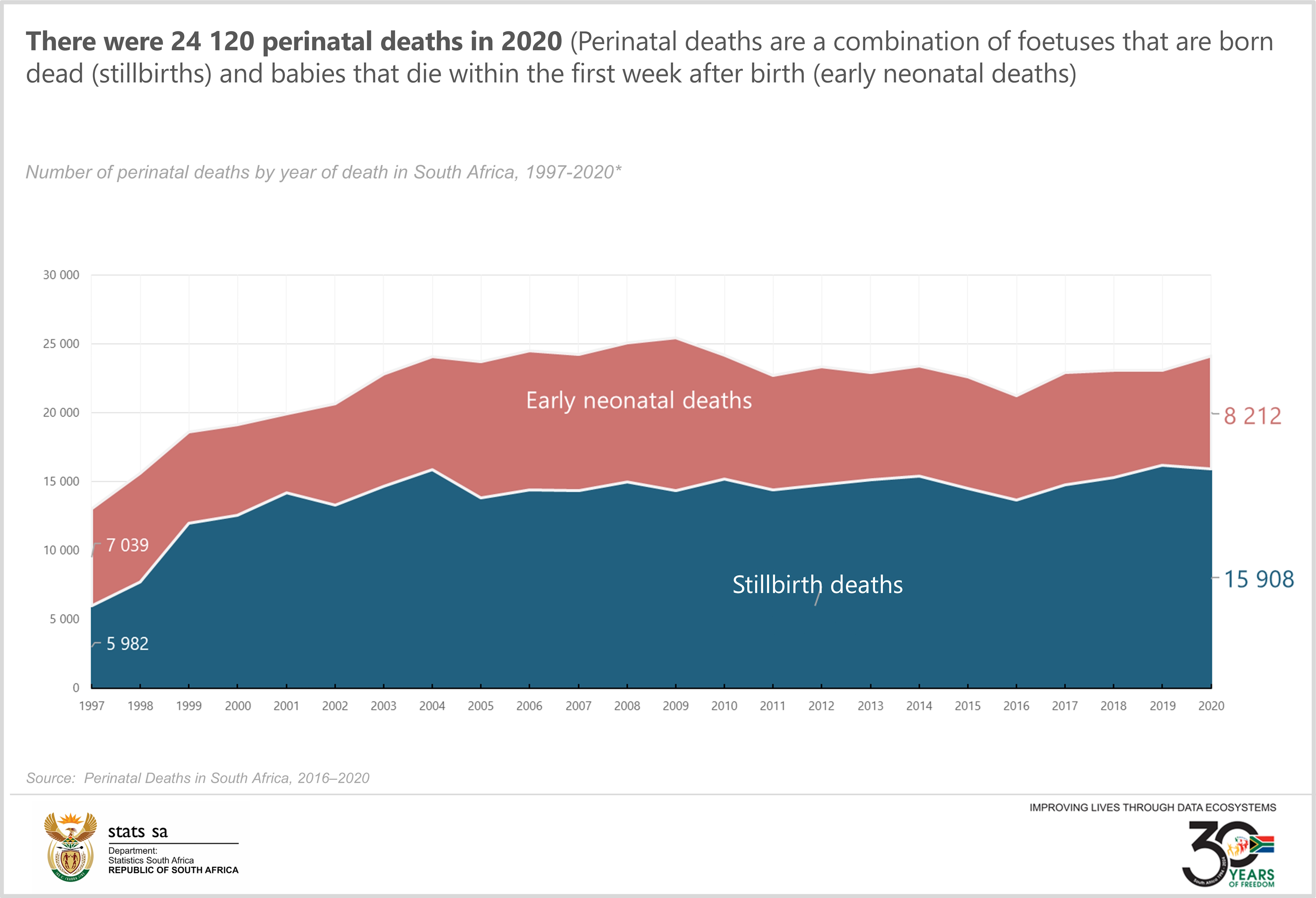
Every year, thousands of babies in South Africa never get to take their first breath, while many others die within days of birth. The latest report from Statistics South Africa (Stats SA), Perinatal Deaths in South Africa, 2016–2020, highlights a concerning trend: stillbirths have more than doubled since 1997, reaching 15,908 in 2020. Early neonatal deaths—those occurring within the first week of life—also remain a significant concern.
Perinatal mortality refers to stillbirths and deaths within the first week of life per 1,000 total live births (WHO, 2018). It includes stillbirths (intrauterine foetal deaths)—when a baby dies in the womb before or during delivery—and early neonatal deaths, which occur within the first seven days of life. The perinatal period generally begins at 22 weeks of gestation and ends seven days after birth, though for international comparison, a 28-week gestation cut-off is often used. In South Africa, a stillbirth is defined as a foetus of at least 26 weeks that shows no signs of life at birth. Understanding these distinctions is crucial for assessing maternal and newborn health outcomes and improving healthcare interventions.
The number of babies who did not survive their first week of life in South Africa has increased over the years. Early neonatal deaths—those occurring within the first seven days—rose from 7 039 in 1997 to 8 212 in 2020, peaking at 11 060 in 2009. Overall, perinatal deaths, which include both stillbirths and early neonatal deaths, increased from 13 021 in 1997 to 24 120 in 2020, with the highest recorded number at 25 422 in 2009. Early neonatal mortality accounts for roughly a third (on average 33,8%) of perinatal deaths over the period 2016 to 2020.
The first few days after birth remain the most critical. Data from 2020 shows that nearly a third of neonatal deaths occurred on the day of birth. By day two, more than half of these babies did not survive, and by day three, the number had risen to over 68%. While the mortality rate declines after the first day, the risk remains significant throughout the first week of life.
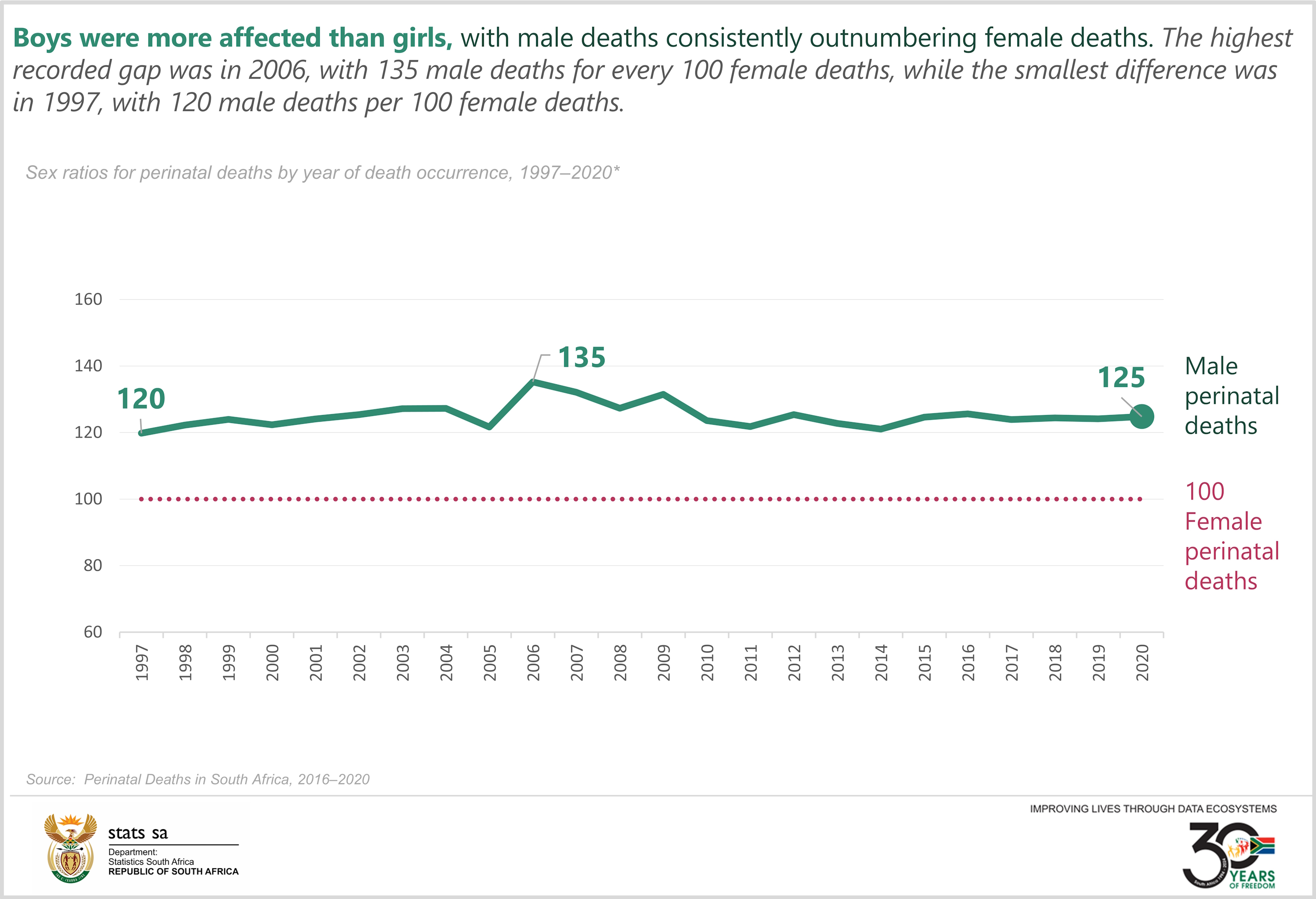
Boys were more affected than girls, with male deaths consistently outnumbering female deaths. The highest recorded gap was in 2006, with 135 male deaths for every 100 female deaths, while the smallest difference was in 1997, with 120 male deaths per 100 female deaths.
Gauteng and KwaZulu-Natal Lead in Perinatal Deaths
Between 2016 and 2020, Gauteng and KwaZulu-Natal consistently recorded the highest share of perinatal deaths, ranging between 20% and 30% of the total cases. In 2020, Gauteng had the highest percentage at 27,7%, followed by KwaZulu-Natal at 21,7%. On the other end, the Northern Cape had the lowest figures, with perinatal deaths staying below 5% throughout the period, reaching 2,9% in 2020. The ranking of provinces remained unchanged over the years.
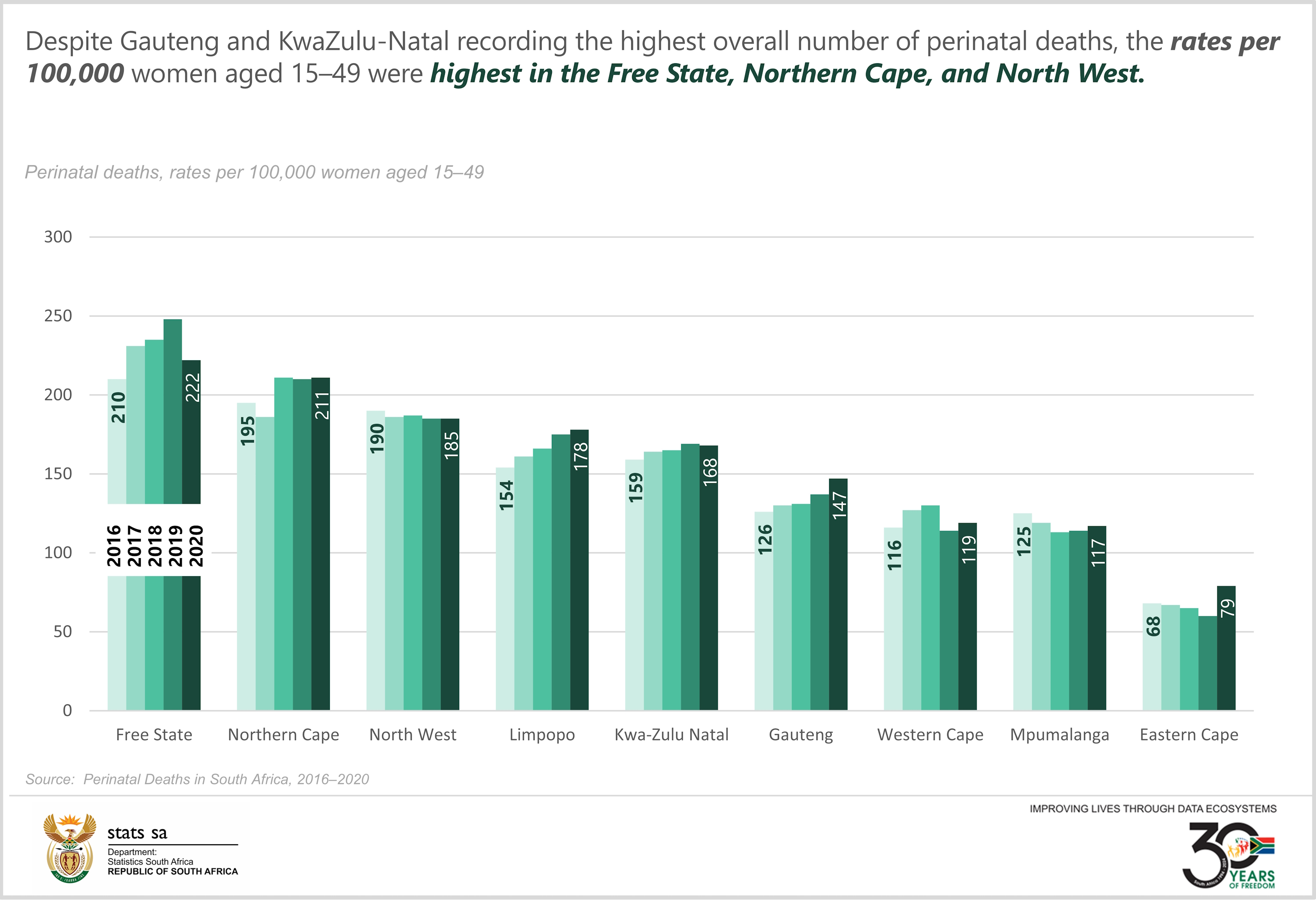
Despite Gauteng and KwaZulu-Natal recording the highest overall number of perinatal deaths, the rates per 100,000 women aged 15–49 were highest in the Free State, Northern Cape, and North West. In contrast, the Eastern Cape had some of the lowest rates, with fewer than 80 perinatal deaths per 100,000 women in this age group. These figures highlight regional disparities in maternal and neonatal health across the country.
Causes of Perinatal Deaths in South Africa
The causes of perinatal deaths in South Africa vary, with stillbirths and early neonatal deaths linked to different underlying conditions. For stillbirths, the leading cause was foetal death of unspecified cause, while early neonatal deaths were primarily due to respiratory and cardiovascular issues affecting newborns during the perinatal period. These conditions have been consistent causes across the reporting years.
When breaking down stillbirths further, the main cause was complications related to pregnancy, labour, and delivery, which accounted for the highest percentage of stillbirths in 2018 at 47,1%. This was followed by respiratory and cardiovascular disorders, which peaked at 9,5% in 2018.
This was followed by malformations of the nervous and circulatory systems, each accounting for 1,4%, while musculoskeletal system malformations made up 0,5% in 2018. These figures highlight the complex and varied factors contributing to perinatal deaths in the country.
Perinatal mortality data is essential for informed decision-making and for improving healthcare services for mothers and newborns, ensuring better outcomes in the future. The rising rates of perinatal deaths in South Africa, driven by a range of factors including complications during pregnancy, labour, and delivery, highlight the critical need for improved maternal and neonatal healthcare.
For more information, download the Perinatal Deaths in South Africa, 2016–2020, here.