
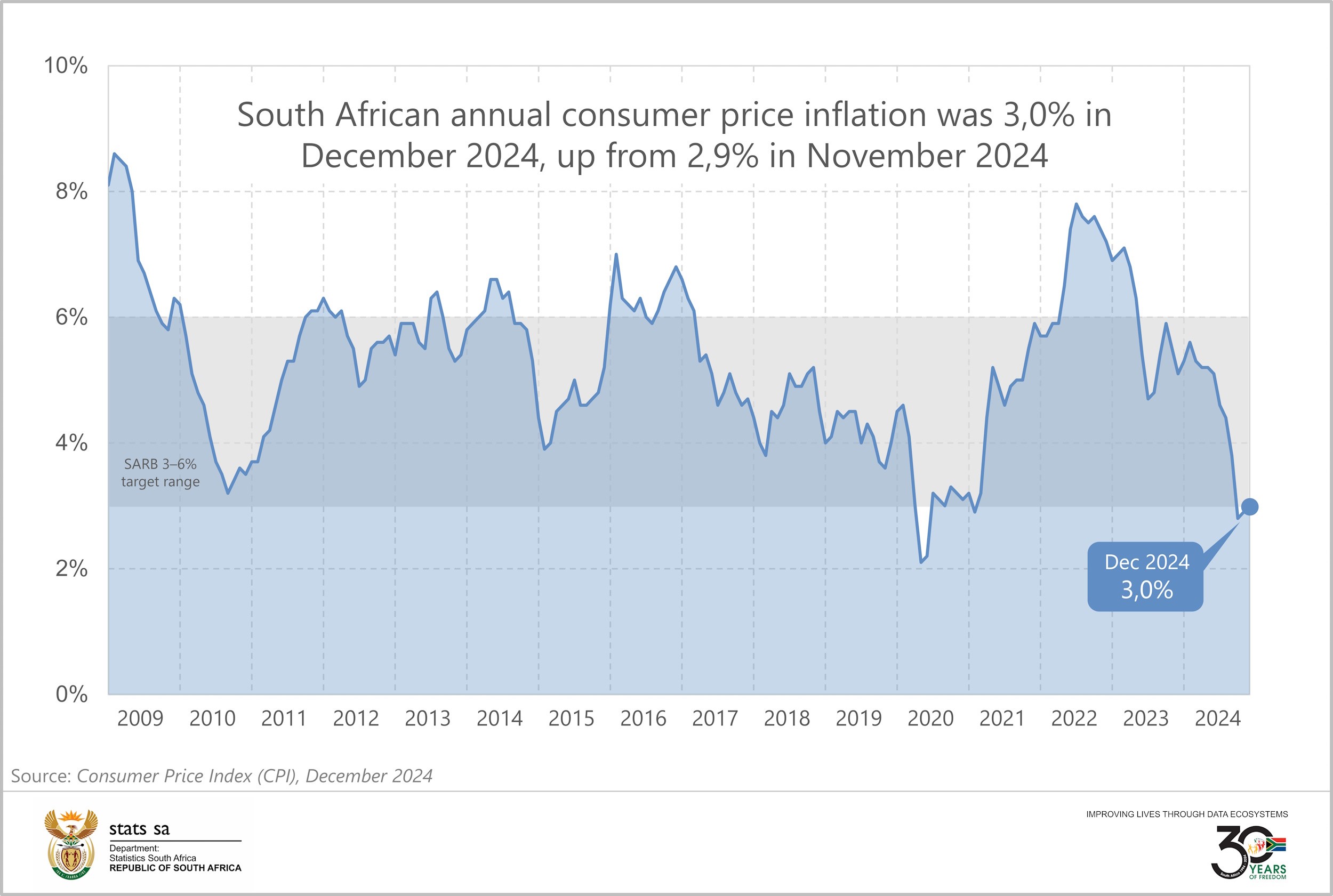
Consumer inflation increased for a second consecutive month, rising to 3,0% in December from 2,9% in November and 2,8% in October. The monthly rate in December was 0,1%.
Food inflation creeps higher
Inflation for food & non-alcoholic beverages (NAB) was 2,5%, up from 2,3% in November. The annual rate for bread & cereals remained steady at 3,7%. The monthly rate was -0,2%, with several wheat-based products declining in price between November and December. Examples include instant noodles (down 2,2%), cake flour (down 1,1%), macaroni (down 0,7%) and brown bread (down 0,6%).
The price index for meat softened by 0,4% in the 12 months to December, representing the lowest annual rate since May 2019 (-0,9%). Products that registered the largest annual declines included sausages (down 3,3%), pork (down 2,2%) and whole chicken (down 1,7%). Several products were more expensive, however, including beef extract (up 5,1%), bacon (up 4,8%) and ham (up 4,2%).
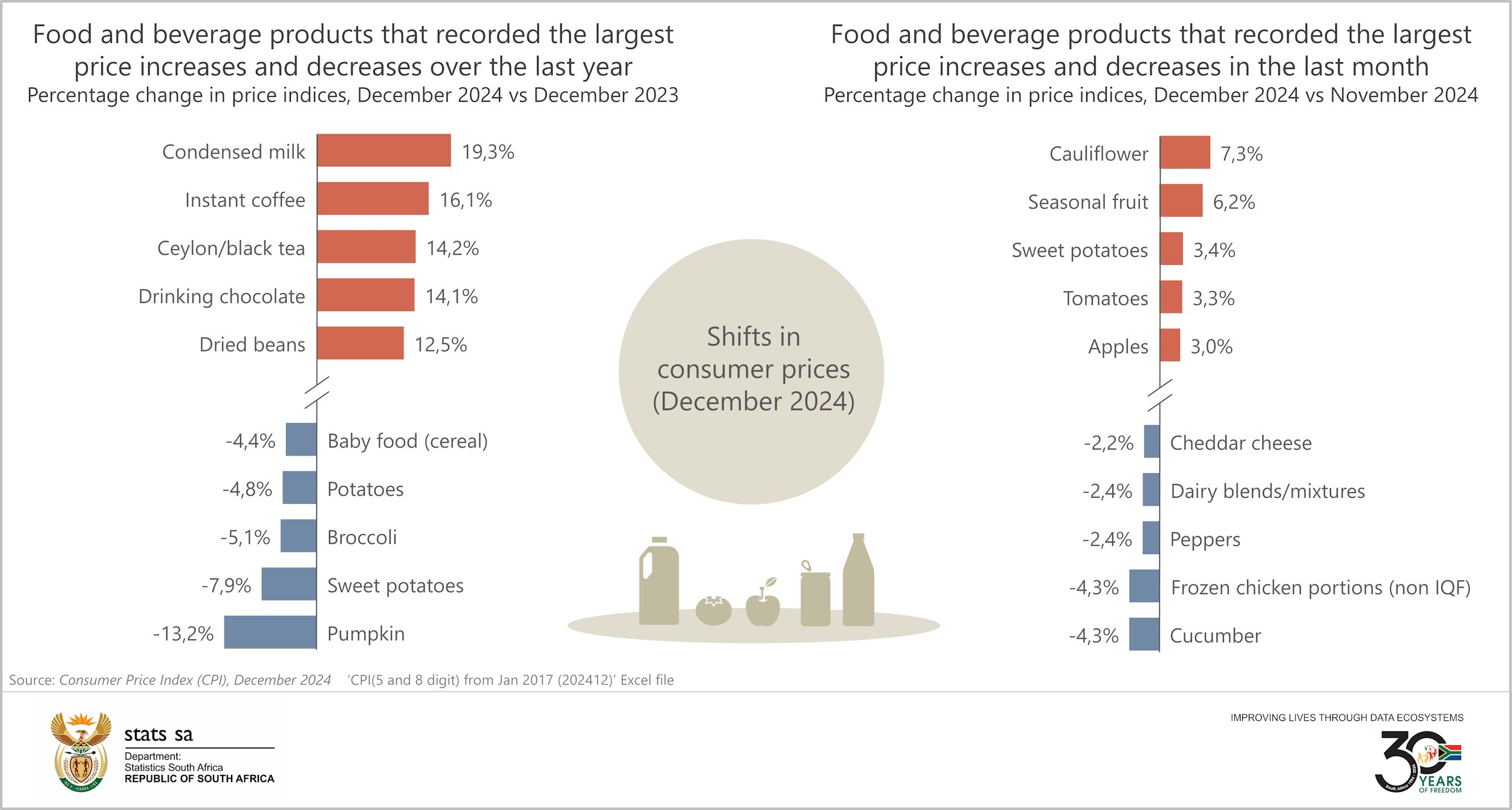
The price index for hot beverages rose by 13,5%, the highest annual rate among all food & NAB groups. Products in this category continued to witness sharp price increases. Instant coffee was 16,1% more expensive in December 2024 compared with December 2023. Other items experiencing hot inflation include black tea (up 14,2%), drinking chocolate (up 14,1%), ground coffee (up 8,0%), rooibos tea (up 7,8%) and cappuccino sachets (up 3,8%).
The graphs below show food and beverage products that registered notable price changes in December.
Used vehicles cheaper in December
Vehicle inflation dropped steeply during 2024 after starting the year at 7,2% in January, falling to 2,6% in December. On average, used vehicles are now cheaper than they were a year ago, recording a decline of 0,6%.
The index for fuel rose by 1,1% between November and December. Despite this increase, fuel prices are 10,2% lower than in December 2023.
Other notable price changes in December
Housing rents are measured every quarter. The annual rate for actual rentals was 2,8% in the fourth quarter of 2024, down from 3,3% in the third quarter of 2024. Owners’ equivalent rent inflation decreased to 2,4% from 2,9% over the same period. These declines pulled the overall rate for housing & utilities down to 4,4% from 4,7%.
Domestic worker wages – also measured quarterly – recorded an annual increase of 4,0% in the fourth quarter of 2024, down from 4,1% in the third quarter of 2024.
Inflation for restaurants & hotels slowed to 4,2% in December from 5,9% in November. This was largely due to a decline in hotel room rates between November and December.
2024 in a nutshell
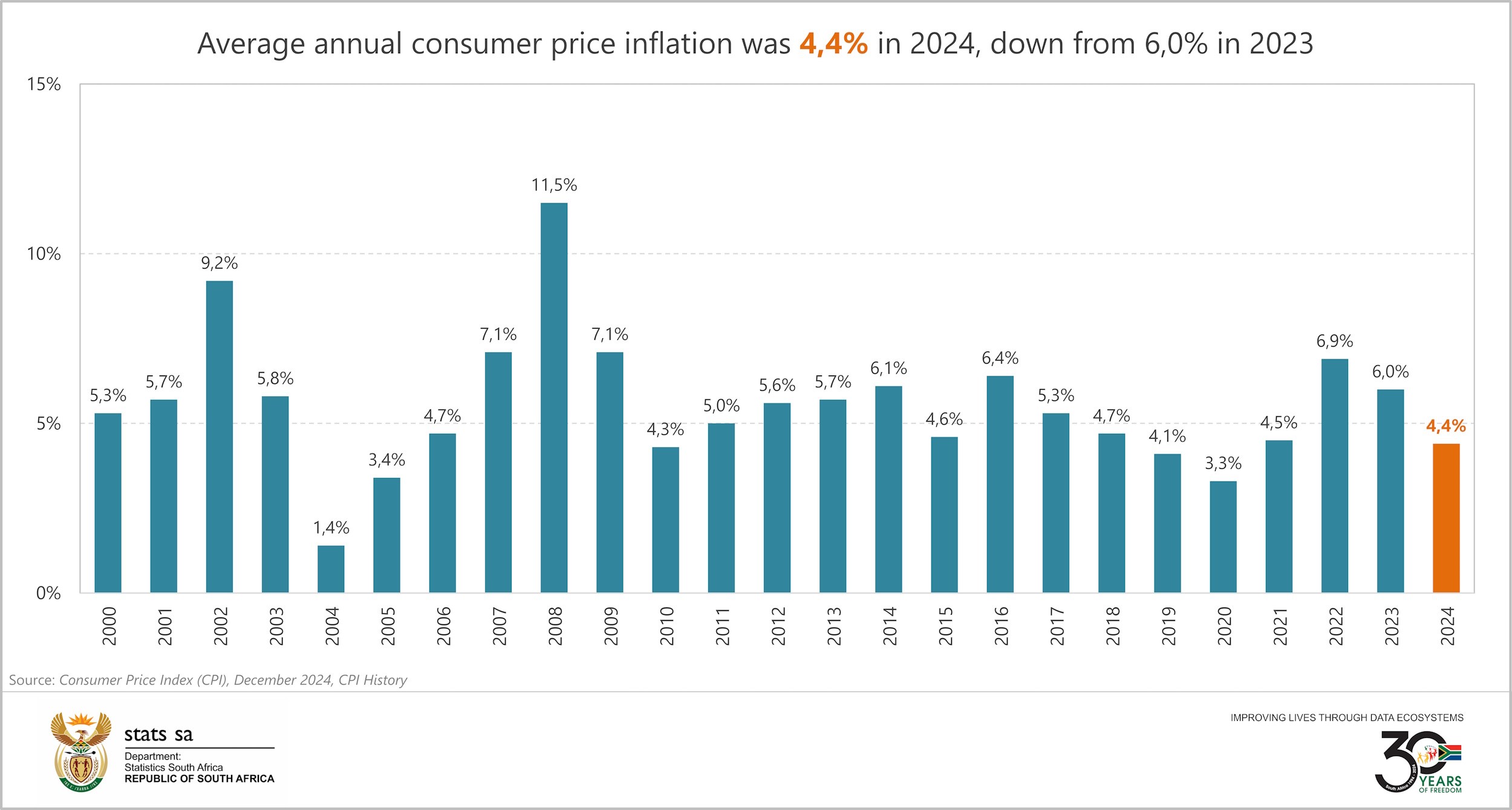
The data for December concludes the results for 2024. The average inflation rate for the year was 4,4%, down from the average of 6,0% in 2023. Inflation in 2024 was the lowest in four years since the pandemic in 2020, when the average rate was 3,3%.
For more information, download the December 2024 CPI statistical release and associated Excel files with indices and average prices here. The archive is available here.
Similar articles are available on the Stats SA website and can be accessed here.
For a monthly overview of economic indicators and infographics, catch the latest edition of the Stats Biz newsletter here.