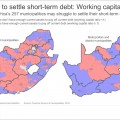
How many South African municipalities are in a position to pay back short-term debt? Stats SA’s latest Financial census of municipalities report provides an answer. One way to gauge a business or government institution’s ability to pay back short-term debt is to inspect the working capital ratio. The working capital ratio is a financial indicator. read more »
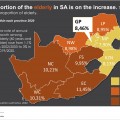
Statistics South Africa (Stats SA) estimates the mid-year population 2020 at 59,62 million in South Africa. Around 51,1% (approximately 30,5 million) of the population is female, while 5,43 million people are aged 60 and over. Demography gives us an awareness of the fact that we live in increasingly aging populations. In South Africa, the growth read more »
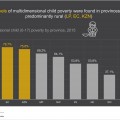
In 2015, the South African population was estimated at 55 million people, of which 19,7 million were children aged less than 18 years (0–17). According to a new report released by Statistics South Africa, Child poverty in South Africa: A Multiple Overlapping Deprivation Analysis, more than 6 out of 10 (62,1%) children aged 0–17 years read more »
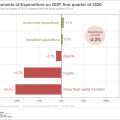
The South African economy recorded its third consecutive quarter of economic decline, falling by 2,0% (seasonally adjusted and annualised) in the first quarter of 2020.1 This followed a contraction of -1,4% and -0,8% in the fourth and third quarters of 2019, respectively. The results presented here cover the period 1 January 2020 to 31 March read more »
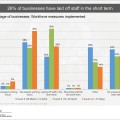
During the final two weeks of Level 5 lockdown, almost half of the businesses responding to our impact survey indicated that they had temporarily ceased trading. During Level 4, this fell to one-fifth, according to a follow-up survey. Other indicators from the Level 4 survey show a similar pattern as the economy returns to full read more »
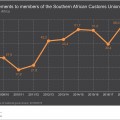
It’s fascinating to think that one of the earliest experiments in free trade happened right here in southern Africa. Exactly 110 years ago this month, the Southern Africa Customs Union (SACU) was born. We explore data showing how the region depends on the oldest surviving trading bloc in the world. On 31 May 1910, South read more »
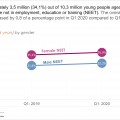
The results of the Quarterly Labour Force Survey (QLFS) for the first quarter of 2020 indicate that employment decreased by 38 000 to 16,4 million and the number of unemployed persons increased by 344 000 to 7,1 million. As a result, the official unemployment rate increased by 1 percentage point to (30,1%) compared to the fourth quarter read more »
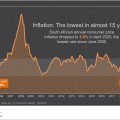
Annual CPI inflation for April reflects the impact of the first month of the COVID-19 lockdown. The rate dropped to 3,0% in April from 4,1% in March, the lowest reading since June 2005 when the rate was 2,8%. Consumer inflation is now at the bottom of the South African Reserve Bank (SARB) target range of read more »

The COVID-19 pandemic and the drastic actions taken to prevent its spread have fundamentally impacted the South African economy and Stats SA’s ability to measure it. Government imposed a restrictive five-week lockdown from 27 March to 30 April. Data collection for the March 2020 consumer price index had been completed before the lockdown and it read more »
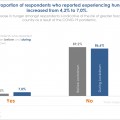
Statistics South Africa (Stats SA) has embarked on a series of three online web-based surveys to measure the impact of the COVID-19 pandemic on individuals in the country to assist government and other stakeholders in their response to the crisis. The second round of the survey (Wave 2) focused on employment, income and hunger-related issues read more »