According to Statistics South Africa’s Volunteer Activities Survey, 2024, an estimated 3,1 million South Africans aged 15 and older participated in volunteer work in 2024—up from 2,7 million in 2018 and 2,2 million in 2014, representing a volunteer rate of 6,9% of the adult population. Volunteer work refers to any unpaid, non‑compulsory activity that individuals perform either through an organisation or directly for others outside their household.
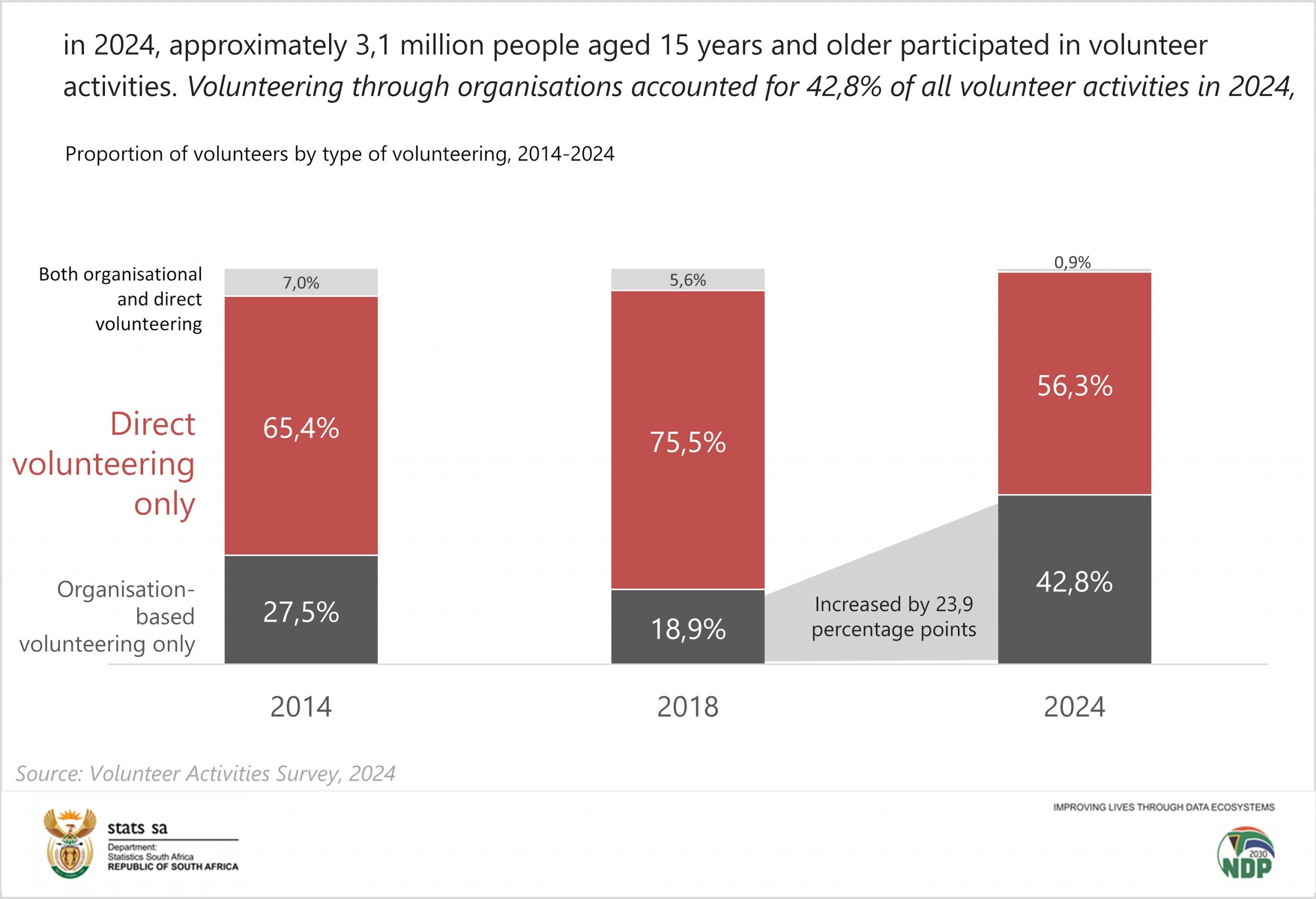
Organisation-based volunteering accounted for the most notable growth over the decade: the number of people volunteering through organisations rose 2,2-fold, from 27,5% in 2014 to 42,8% in 2024—an increase of 23,9 percentage points. In contrast, direct volunteering decreased by 9,1 percentage points over the same period (from 65,4% in 2014 to 56,3% in 2024). As a result, total annual hours volunteered fell for both men and women, even as hours dedicated to organisation-based volunteering increased between 2014 and 2024.
Between 2014 and 2024, the volunteer rate increased by 1,1 percentage points—rising from 5,8% to 6,9%. Women were more likely to volunteer than men, with black African women showing the highest participation rates (7,7% in 2024), followed by the white population group (6,9% in 2024).
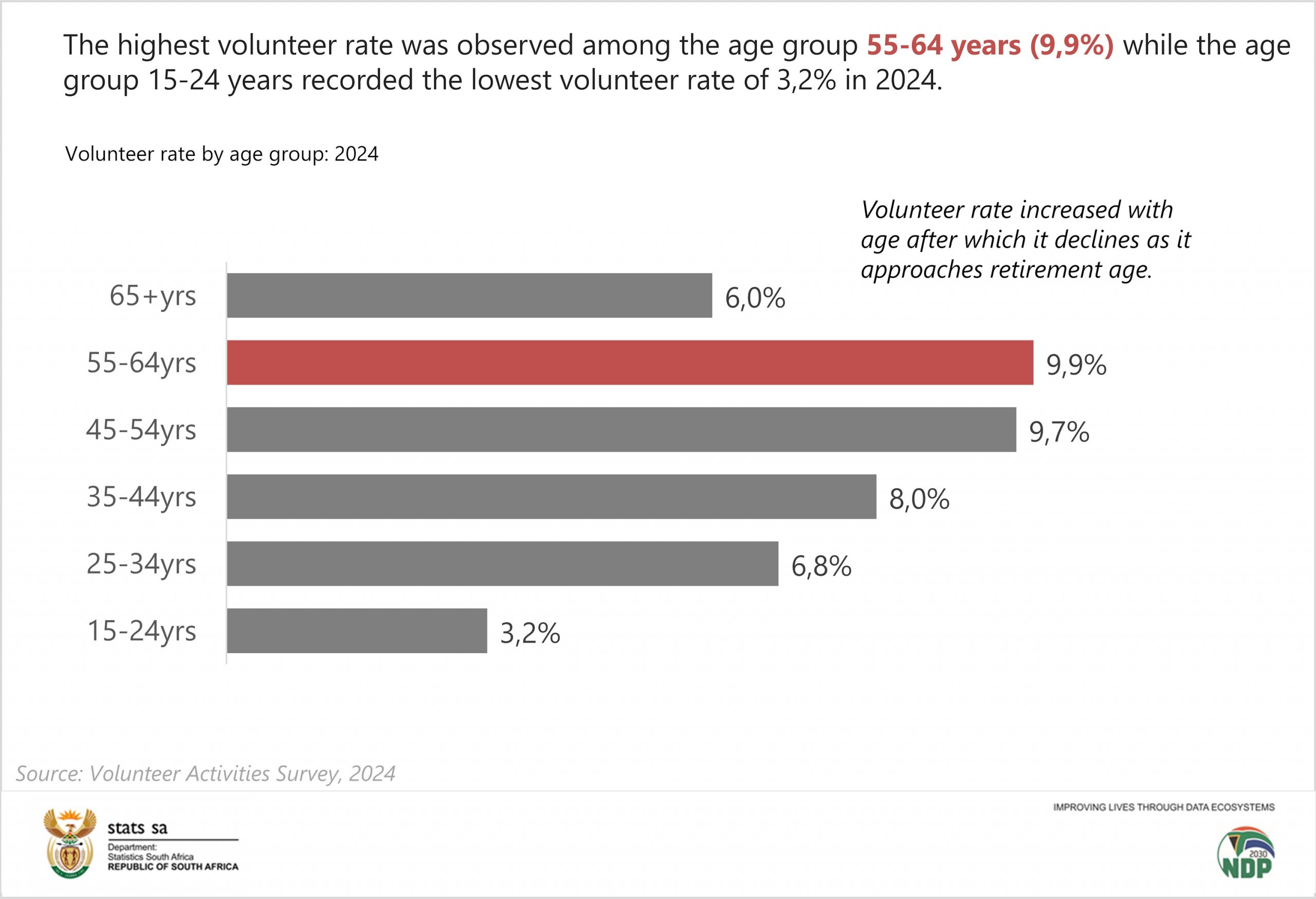
Older individuals were more likely to volunteer than their younger counterparts. In 2024, the highest volunteer rates were observed among those aged 55–64 years (9,9%) and 45–54 years (9,7%). The lowest volunteer rate was recorded among young people aged 15–24 years (3,2%). Overall, volunteering tends to increase with age, declining only as people reach retirement.
While lower levels of education are associated with higher unemployment rates (as highlighted in the QLFS Q4:2025 findings), volunteering patterns paint the opposite picture. Individuals with tertiary qualifications were the most likely to volunteer (9,6% in 2024). Graduates have consistently shown the highest levels of participation—10,6% in 2014, 8,9% in 2018, and 9,6% in 2024.
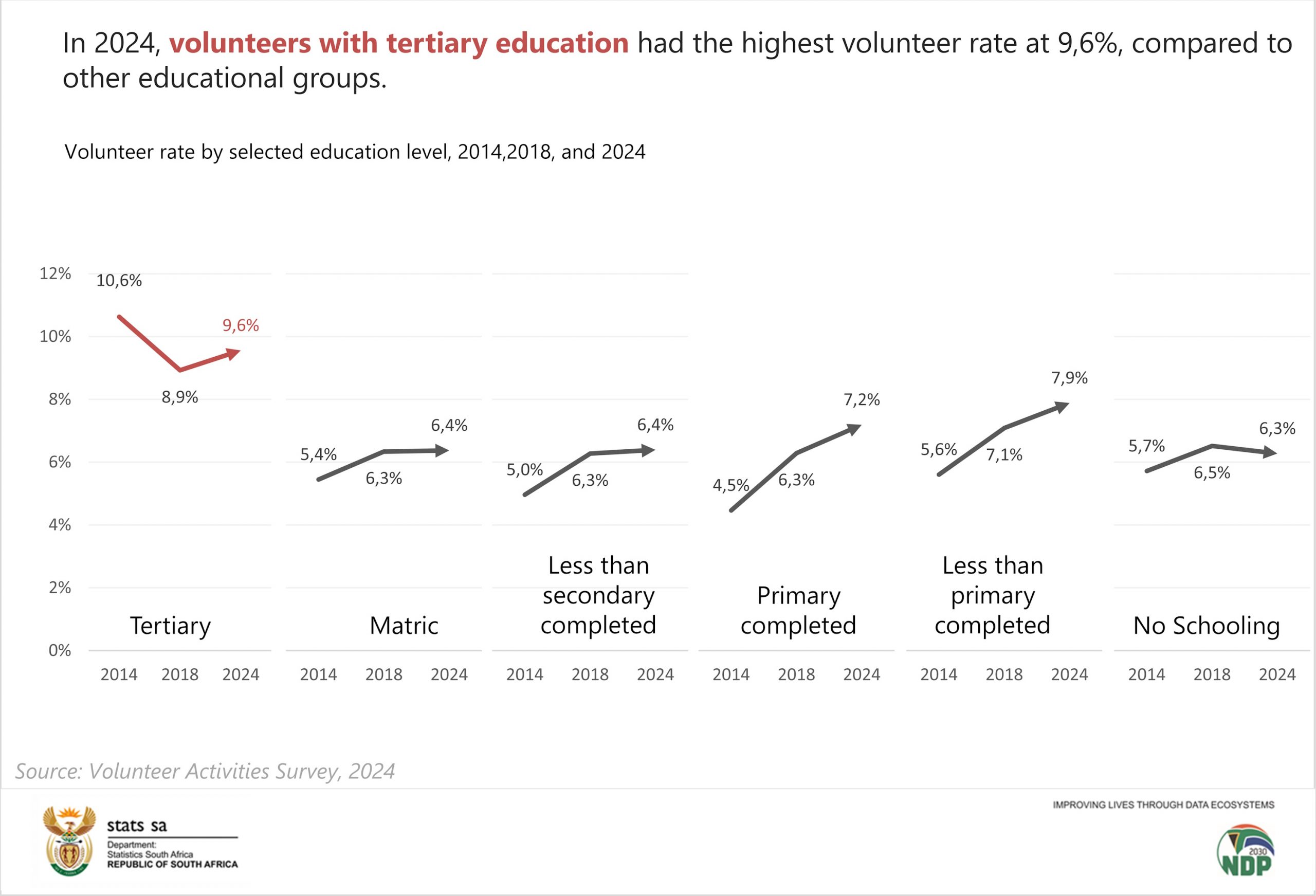
Over the decade, volunteer rates among those with primary education increased the most, while graduates experienced a slight decline in 2024 compared to 2014.
In 2024, discouraged work‑seekers had the highest volunteer rate (10,1%), followed by unemployed individuals (9,6%). Most volunteers engaged in activities as individuals, followed by those volunteering through organisations and community structures.
Despite the increase in the number of volunteers between 2014 and 2024, total annual hours volunteered decreased substantially—from 610,5 million hours in 2014 to 449,5 million hours in 2024, a decline of 26,4%. Throughout all three years (2014, 2018 and 2024), most volunteer hours were devoted to community and social services, with the majority of volunteers working in Sales and Elementary occupations.
Why do people volunteer?
The leading motivation for volunteering was simply the desire to help—either because individuals were asked to assist or because they wanted to contribute to a cause they believed in. Men and women recorded similar proportions of volunteers who “just wanted to help” (91,1% and 91,4% respectively).
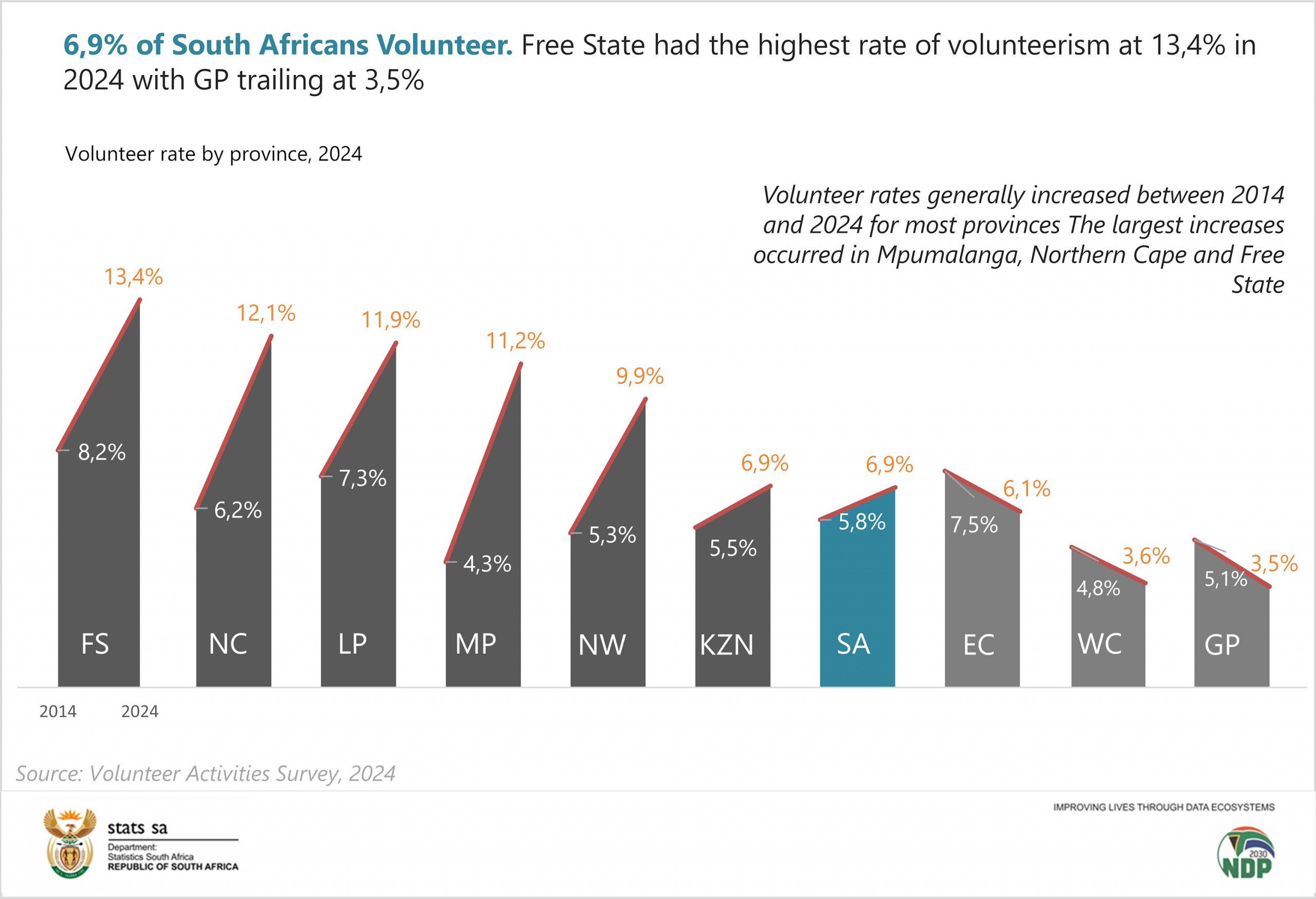
Compensation patterns have shifted over time. In 2014, volunteers most commonly received or expected to receive money (23,7%), followed by food (19,2%). By 2024, food had become the dominant form of compensation, reported by 86,5% of volunteers. Provincial figures show that Free State (13,4%), Northern Cape (12,1%), Limpopo (11,9%) and Mpumalanga (11,2%) recorded the highest volunteer participation rates.
Most volunteers were involved in direct volunteering—1,8 million individuals contributing 234,5 million hours. These activities include attending and helping at funerals and churches, caregiving (for people or animals), household chores, teaching or administrative tasks, and broader community work.
In 2024, the total annual hours volunteered translated to the equivalent of 216 thousand full‑time, year‑round jobs. This is a decline from 293 thousand jobs in 2014 and 308 thousand in 2018. However, despite the decline in hours between 2018 and 2024, the monetary value of volunteering increased by more than R4 billion. Technicians (R5,7 billion), Sales workers (R4,9 billion), and those in Elementary occupations (R4,2 billion) contributed the most to the overall estimated value of R17,5 billion in 2024.
For more information, download the full report here.