
Headline consumer inflation cooled to 3,0% in February from 3,5% in January. The monthly change in the consumer price index (CPI) was 0,4%.
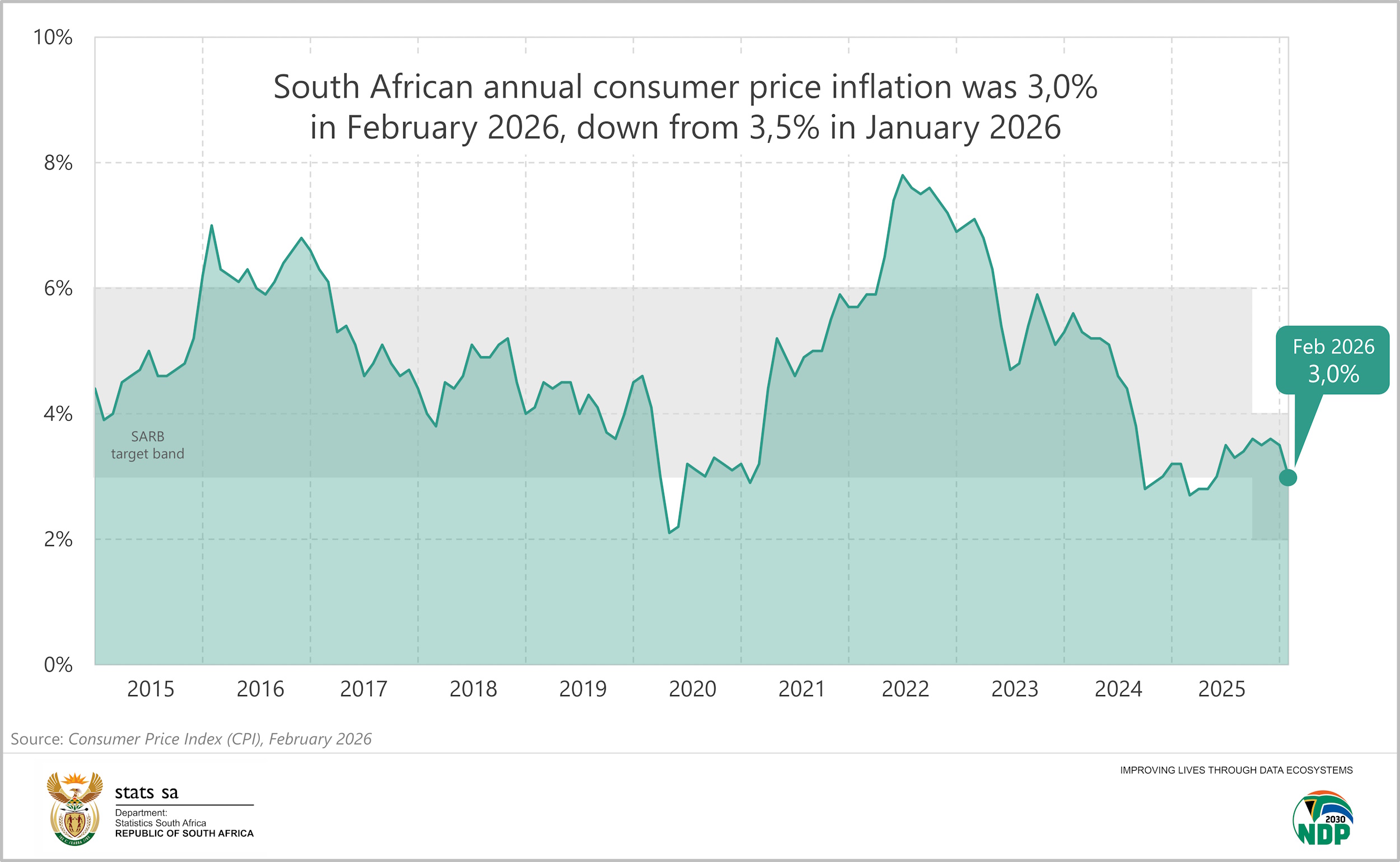
To understand why inflation decreased this month, it is useful to compare the monthly change in February this year (0,4%) with February 2025 (0,9%). February’s monthly print was lower than average, and this is attributed to three main factors.
First, there was a delay in implementing some new medical aid rates. Most medical schemes increase prices at the beginning of the year and are surveyed by Stats SA in February, resulting in a higher-than-average monthly rate. In February 2026, however, not all medical schemes had adjusted their contributions, resulting in a lower monthly change than would otherwise have been the case. Those schemes that implemented increases contributed to an average rise of 6,4% in health insurance, lower than the 10,5% increase recorded in February 2025.
Health insurance has a relatively large weight of 6,2% in the inflation basket, so the delayed implementation of medical aid contributions in February had a notable impact on the headline rate. If medical scheme contributions are implemented later in the year, these changes will most likely affect the headline rate.
Second, there was a substantial decline in fuel prices in February. Fuel prices decreased by 3,1% month-on-month compared with a rise of 3,9% recorded in February 2025, contributing to an annual decline of 10,1% in the fuel index.
Third, prices for medical services increased at a slower pace compared with the same month last year. Most health services are surveyed in February each year. The monthly change in the index was 3,8%, lower than the 5,0% recorded in February 2025. Examples of monthly increases recorded in February 2026 include dentists (5,3%), paediatricians (4,4%), general practitioners (3,5%), physiotherapists (2,2%) and optometrists (1,6%).
Food inflation slows for the first time in four months
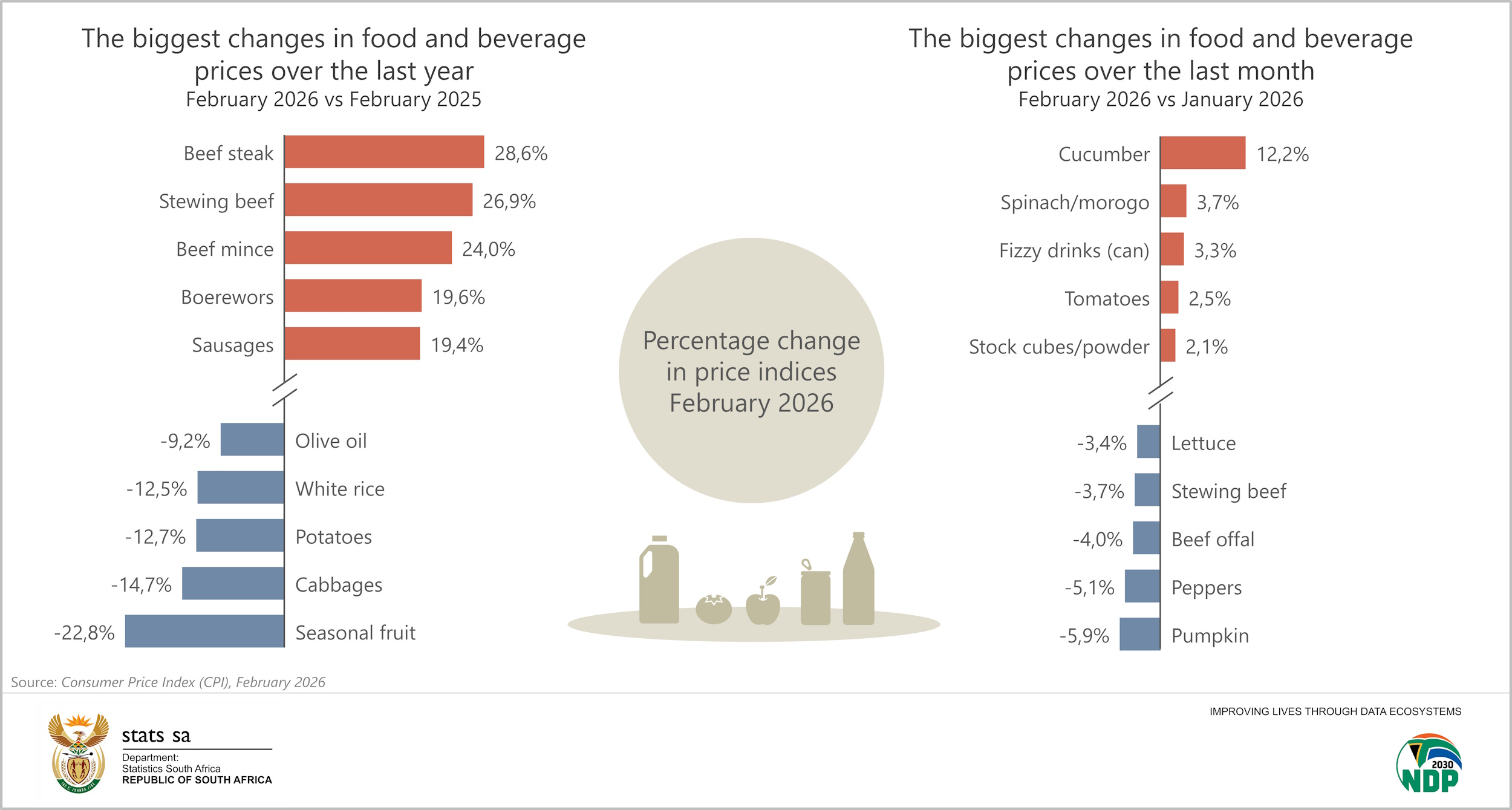
Softer food & non-alcoholic beverages (NAB) inflation also contributed to the lower CPI print in February. The annual rate for food & NAB declined to 3,7% from 4,4% in January. The monthly change was -0,3%. Five of the 10 subgroups recorded negative month-on-month changes, while four registered negative annual changes.
Cereal products entered deflationary territory at -0,5%, down from 0,6% in January. White rice is 12,5%, spaghetti 0,5%, and brown bread 0,1% cheaper than a year ago.
Those who enjoy a weekend braai can breathe a little easier. Meat inflation eased to 12,2% from 13,5% in January. The monthly rate was -1,1%, the first decline in almost a year. Beef products recorded large monthly price decreases, including beef offal (-4,0%), stewing beef (-3,7%), beef mince (-3,2%) and beef steak (-2,6%). Other notable meat products that were cheaper include pork (-1,6%) and lamb & mutton (-1,4%).
Cooking oil prices were also down. The price index for oils & fats declined by 0,4% between January and February. The annual rate was 4,0%, unchanged from January. Lower monthly prices were recorded for olive oil (-2,1%), sunflower oil (-0,6%) and margarine spread (-0,4%).
Inflation for alcoholic beverages rose to 5,1% from 4,6% in January, with a 0,7% monthly increase. Beer prices were up by 1,2% in the month, taking the annual rate to 6,6%. The index for brandy rose by an annual 6,0% and for spirit coolers & cider by 4,8%.
For more information, download the February 2026 CPI statistical release and associated Excel files with indices and average prices here.
Similar articles are available on the Stats SA website and can be accessed here.
For a monthly overview of economic indicators and infographics, catch the latest edition of the Stats Biz newsletter here.