


Across South Africa, millions of grandparents are stepping in to raise their grandchildren. Whether due to economic hardship, parental struggles, or social shifts, more children are finding their strongest support system in their grandparents’ arms.
According to the report Child Series Volume IV: Children Living with Grandparents in South Africa, 2023, approximately 6,7 million grandparents lived with 9,7 million children aged 0–17. Of these grandparents, 69,3% were grandmothers, while 30,7% were grandfathers.
South African household structures are shaped by a complex interplay of socio-economic pressures, cultural traditions, and migration patterns. High unemployment and widespread poverty often push families to consolidate resources by living together, while deeply rooted cultural values continue to uphold the importance of extended family networks. Additionally, urban migration has led to housing shortages, further driving the prevalence of multi-generational living arrangements.
Households in South Africa typically fall into four broad categories. Single-generation households consist of individuals or couples without children, while double-generation households include parents raising their children. Triple-generation homes extend to include grandparents, and skip-generation families see grandparents taking on primary caregiving roles in the absence of parents.
Inter-generational living offers numerous benefits, including emotional support, shared responsibilities, and cost-saving measures. Grandparents often play a crucial role in childcare, while younger family members assist with elderly care. These households not only foster strong familial bonds but also serve as vital hubs for preserving cultural traditions and ensuring social stability.
In 2023, nearly 8 million children aged 0–17 years—38% of South Africa’s total child population (21 million) — were living in households headed by their grandparents.
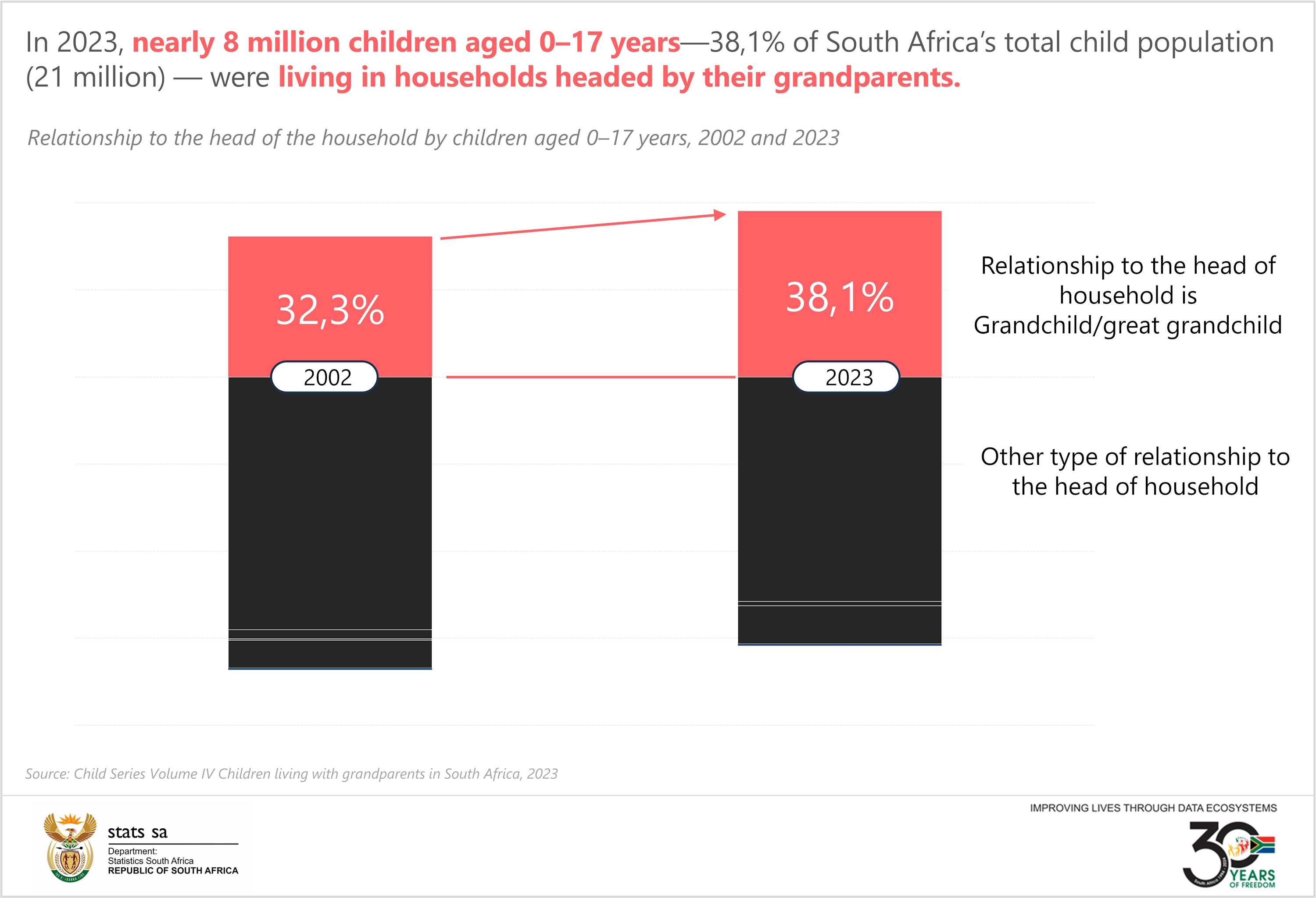
Within these households, approximately 3,4 million grandparents were the head of the household, providing care and stability for these children. The majority were grandmothers, who accounted for 64,5%, while grandfathers made up 35,4%. This trend highlights the significant caregiving role grandmothers assume compared to grandfathers, often extending across multiple generations.
The challenges faced by children in inter-generational households across South Africa vary by region, influenced by socio-economic conditions, cultural practices, and urbanisation levels. In urban areas, overcrowding and housing shortages are more prevalent, leading to stress and limited privacy for children. In contrast, rural areas may offer more space but often struggle with limited access to quality education and healthcare.
Financial strain is another key factor, particularly in regions with higher poverty rates, where limited resources can affect children’s access to education, nutrition, and extracurricular activities.
KwaZulu-Natal recorded the highest percentage of children living in grandparent-headed households at 10,1%, followed by Gauteng (6,3%) and the Eastern Cape (5,4%). The Northern Cape had the lowest proportion, with just 0,7% of children living in such households.
In 2023, nearly half (49,6%) of grandparent households with children in South Africa had more than six members, highlighting the prevalence of large, multi-generational living arrangements. Additionally, 30,4% of these households comprised five to six members, 18,4% had three to four members, and only 1,7% consisted of two members
KwaZulu-Natal had the highest percentage of grandparent households with more than six members (62,1%), followed by Mpumalanga (51,2%). Meanwhile, households with five to six members were most common in the Free State and Western Cape, each at 36,9%.
Children benefit significantly from living with their parents, as it positively impacts their well-being and development. However, in South Africa, the absence of biological parents in caregiving roles is a widespread reality due to socio-economic challenges, migration, or health issues. In such cases, children are often raised by other family members, including grandparents, aunts, uncles, or older siblings, ensuring continuity of care and support.
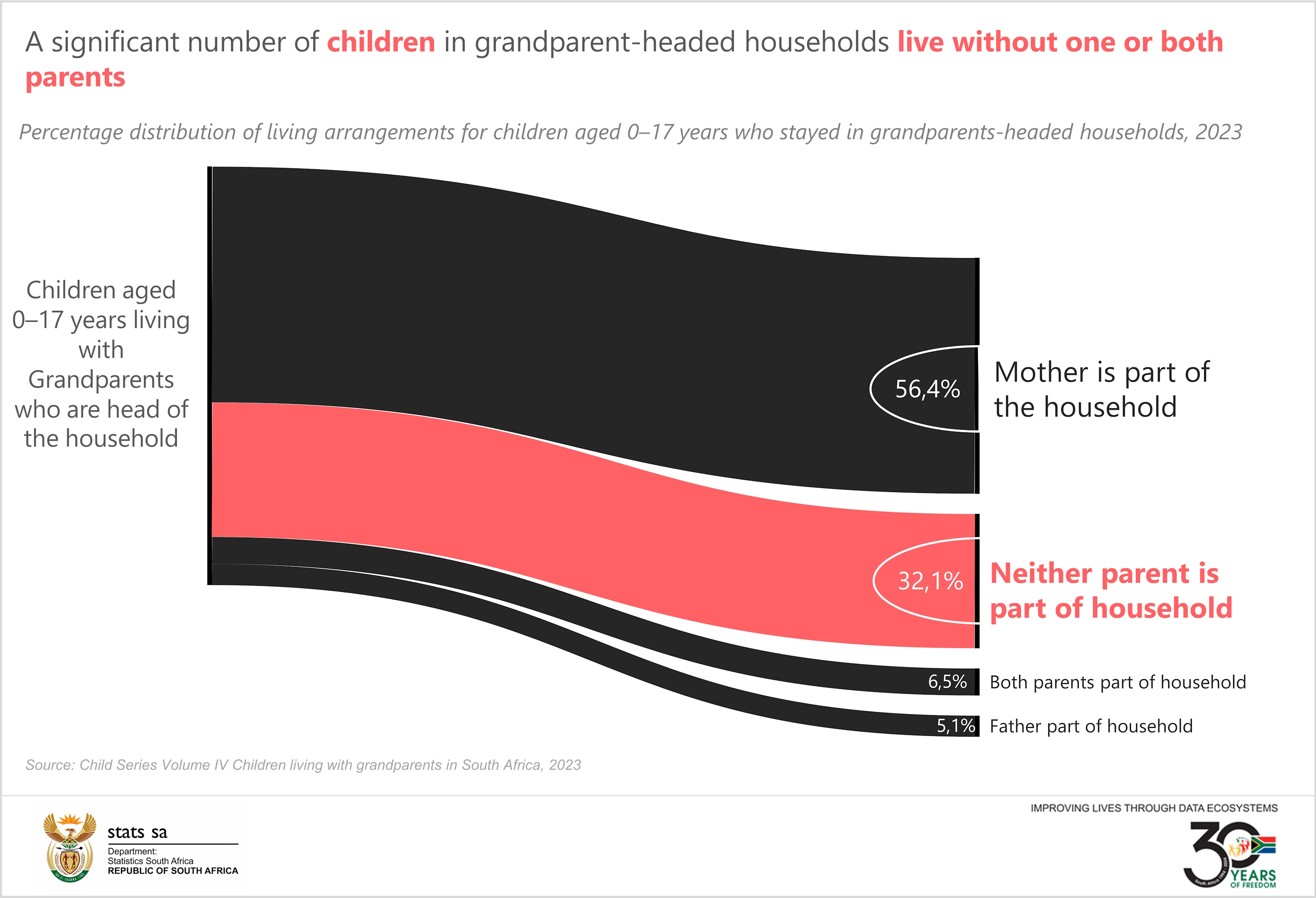
In South Africa, a significant number of children in grandparent-headed households live without one or both parents. In 2023, 56,4% of children in such households had their mothers present, while only 5,1% lived with their fathers. Meanwhile, 6,5% of children in grandparent-headed homes lived with both parents, and 32,1% lived with neither.
Regional differences highlight variations in household structures. KwaZulu-Natal recorded the highest percentage of children living in grandparent-headed households with their fathers (34,3%), with their mothers (25,8%), and without either parent (27,9%). In contrast, the Western Cape had the highest percentage of children living with both parents in grandparent-headed households (27,0%).
Urban areas also showed a higher likelihood of children residing with both parents in grandparent-headed homes (65,1%), compared to only 34,9% in rural areas. Conversely, children in rural grandparent-headed households were more likely to have neither parent present (64,1%), often placing caregiving responsibilities on grandparents.
Impact on Children
Growing up in inter-generational households offers numerous benefits for children. A strong family support system enhances emotional well-being and resilience, while exposure to cultural traditions and values fosters a sense of identity and continuity. Children often contribute to household chores and caregiving, instilling responsibility and cooperation. Additionally, shared financial resources can ease economic pressures, improving access to better living conditions and opportunities. These factors create a nurturing and stable environment that supports children’s growth and development.
However, inter-generational living also presents challenges. With multiple generations under one roof, children may experience limited personal space and privacy, making it difficult to study or unwind. Overcrowding can lead to stress, while financial strain—despite pooled resources—may still limit opportunities. In some cases, children take on caregiving duties for elderly relatives, which can be demanding and impact their schoolwork and leisure time. Balancing these challenges is essential to maintaining a supportive environment for children in grandparent-headed households.
For more information, download the full report here.