
Migration is reshaping South Africa’s social and economic landscape, yet behind the statistics are real people—families seeking stability, workers driving industries, and vulnerable groups at risk.
South Africa’s immigrant population has seen a steady rise over the past few decades, increasing from 2,1% of the total population in 1996 to 3,9% in 2022. By 2022, the number of immigrants in the country had reached 2,4 million, with women making up just over one million of that total.
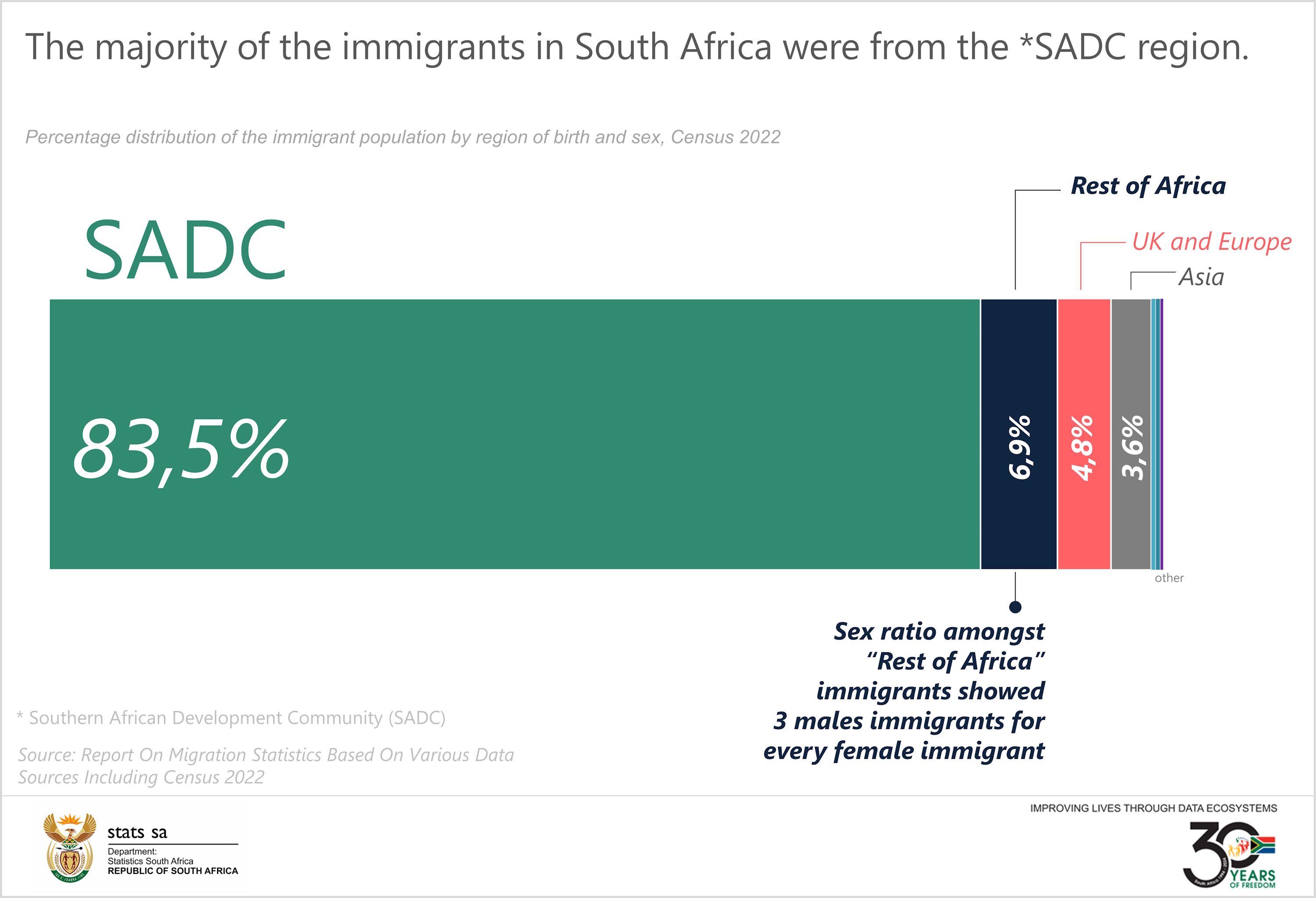
According to the Report on migration statistics based on various data sources including census 2022, released by Statistics South Africa, most immigrants in South Africa come from the Southern African Development Community (SADC) region, with men making up 47,0% and women 36,5%. Notably, immigration from the rest of Africa is male-dominated, with three men for every one woman.
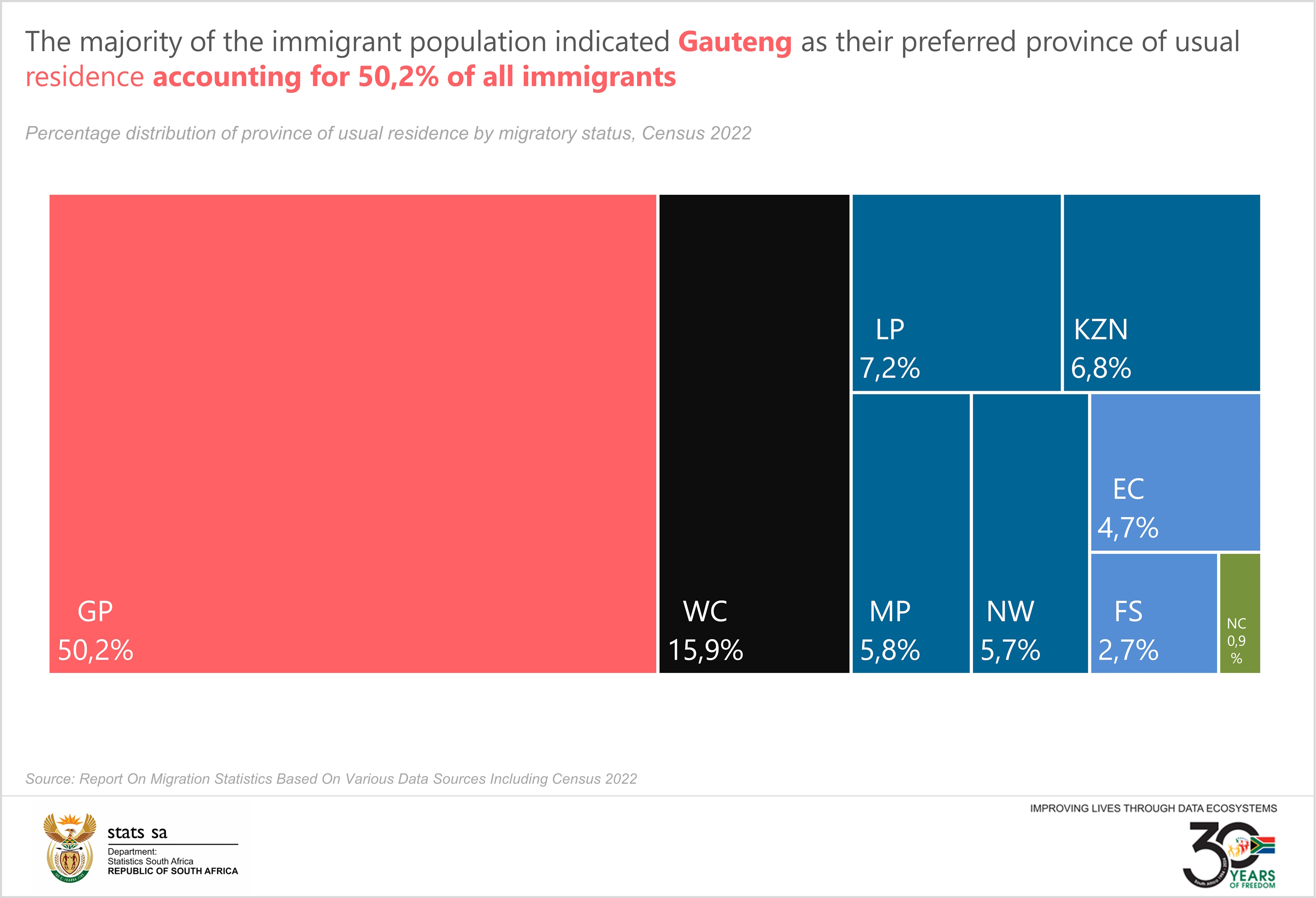
Gauteng remains the top destination, with 28,4% of male immigrants and 21,8% of female immigrants calling it home. The Western Cape follows as the second most preferred province, attracting 9,1% of male immigrants and 6,8% of female immigrants.
Immigrants play a role in South Africa’s economy, contributing to economic growth, and diversity. However, employment among immigrants and internal migrants in South Africa reveals a stark gender disparity. Across all groups—non-migrants, internal migrants, and immigrants—men were consistently more likely to be employed than women. Among immigrants, over 1 million men had jobs, compared to just 400 000 women. The gap extends beyond employment, with 281 553 immigrant women classified as economically inactive, far exceeding the 88 598 men in the same category. Employment rates further highlight the divide — 45,8% of male immigrants were employed, compared to just 18,2% of females. Among internal migrants, 31.9% of men had jobs, while only 22,9% of women did. For non-migrants, women were disproportionately represented in the Not in Education, Employment, or Training (NEET) category, underscoring the broader economic challenges they face.
A sector-specific breakdown of South Africa’s labour market highlights how employment patterns vary by migration status and gender. Among immigrants, men were concentrated in the wholesale and retail trade (24,2%) and construction (14,8%), while women were notably represented in private households (9,4%). Internal migrant men were more active in finance and business services (11,5%), wholesale and retail trade (9,4%), and community, social, and personal services (8,7%). Non-migrant women dominated the community, social, and personal services sector, accounting for 16,7% of employment in that industry. These trends offer key insights into how migration influences workforce distribution across different industries.
People migrate for a variety of reasons, driven by economic opportunities, political instability, environmental changes, and personal aspirations. Economic migration is one of the most common factors, as individuals seek better job prospects, higher wages, and improved living conditions. Others flee conflict, persecution, or human rights violations, seeking safety and stability in a new country. Climate change and natural disasters also force people to relocate, as rising sea levels, droughts, and extreme weather make their homes uninhabitable. Additionally, family reunification and educational opportunities motivate many to move abroad. Migration is a complex phenomenon shaped by personal, social, and global factors.
Between 2011 and 2022, the primary reason for internal migration among both men and women was the search for paid employment. According to the data 13,7% of male migrants and 9,4% of female migrants moved primarily for job opportunities. For men, the second most common reason was job transfers or accepting new employment, accounting for 7,8%. In contrast, 9,6% of female migrants cited moving to live with or be closer to a spouse, family, or friends—often due to marriage—as their main motivation. These trends highlight how economic factors drive male migration, while social and family ties play a stronger role for women.
Migrants face persistent challenges as they seek better opportunities and stability in new environments. From demanding jobs with low pay to limited access to social services and family separation, their journey is often marked by hardship. Language barriers, discrimination, and uncertain legal status further complicate their path. Yet, despite these struggles, migrants continue to contribute to economies and communities, showing resilience in the face of adversity.
For more information download the full report here.